Dream raises $17M to turn building designs into construction plans
The startup emerged from stealth with a16z-led seed funding and a service it says coordinates building layouts, structures and systems rather than just rendering pictures.
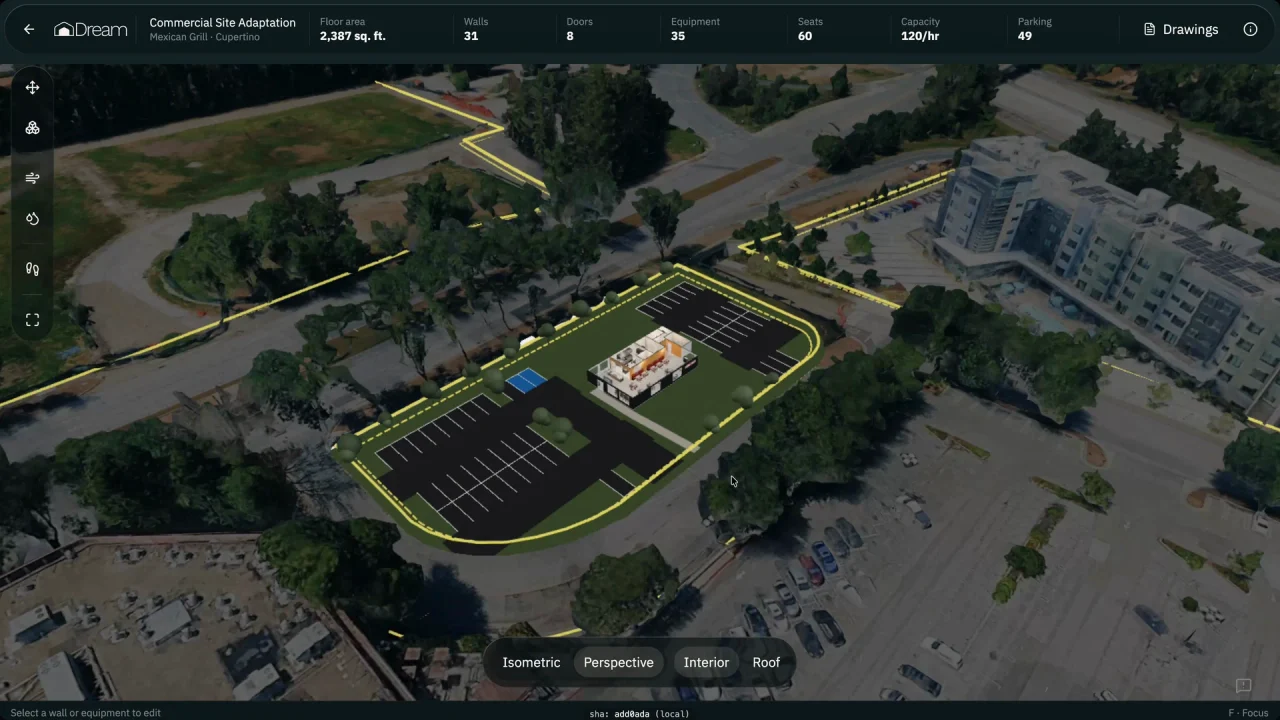
Dream has emerged from stealth with $17 million in seed funding for AI that it says produces coordinated building designs, not just attractive building images. TechCrunch reported the October 29 launch and Andreessen Horowitz-led round, with SV Angel, XYZ and Zigg Capital among the other backers.
Founded by former Palantir executives, the startup calls its approach built world models. The practical target is architecture, engineering and construction: connecting a floor plan to the structure, plumbing, HVAC and other systems that have to fit inside the same building.
A construction service around the model
Dream’s launch site says commercial customers receive a drawing set a general contractor can build from. Its FAQ, dated October 28, describes the company as serving as architect of record on construction projects in California and Texas, with an initial focus on commercial buildings such as storefronts, offices and data centers.
The company also describes adapting a prototype design across multiple sites, rechecking layout, structure and code constraints at each location. Prospective commercial customers are directed to a contact form or demo request. The reviewed site does not present a downloadable model checkpoint or a self-service inference API.
This positioning matters because the proposed product is a design-and-engineering workflow with deliverable plans. A convincing generated image alone would not establish the same capability.
The scale and engineering claims remain attributed
TechCrunch reports the founders’ claim that Dream was trained on more than 100 million square feet of building data gathered from U.S. permit archives. Both the report and the company’s site describe ten active projects in California and Texas. Those figures are company-supplied descriptions of training and deployment, not an independent audit or evidence that ten buildings have been completed.
Dream says its models account for physical constraints and that generated options are checked against code. Its site advertises producing thousands of designs in minutes. The reviewed sources do not provide an independent benchmark establishing the speed, completeness or engineering validity of every generated drawing set, so those capabilities remain the company’s claims.
The announcement is nevertheless a concrete business and product event: new funding and a public construction-design offering around proprietary models. For developers and AEC teams, the question to follow is how much of the design process the service can reliably carry through to usable, reviewed construction documents on real projects.