NYT Cooking's AI recipe tweaks spark a subscriber backlash
Nieman Lab reports reader objections to AI-assisted substitutions in the paid cooking app, while supporters see a practical way to adapt dinner.
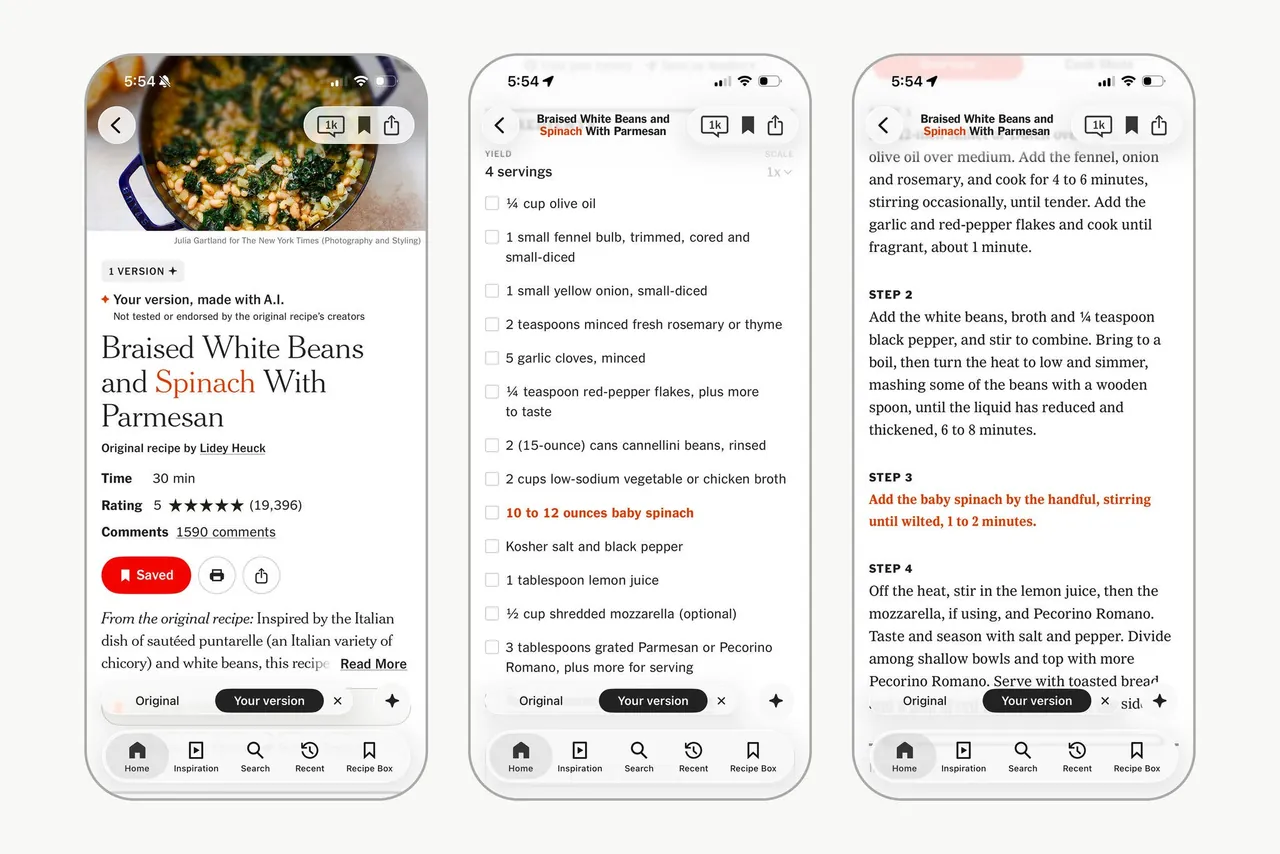
NYT Cooking’s AI-assisted recipe modifications are provoking a dispute over what subscribers are paying for: practical help adapting dinner, or a refuge from machine-generated food advice. In an October 28 report, Nieman Lab documented objections from readers who value the service’s human culinary expertise, alongside supportive comments from cooks who welcome easier substitutions.
The feature is not a new October 29 launch. Genevieve Ko, a senior editor and columnist for NYT Cooking, explained it in an October 23 Times Insider article updated October 27. The announcement says Cooking subscribers can use the tool in the iOS app, with broader availability planned. Ingredient substitutions are one focus; the service had also introduced AI-assisted measurement conversion and recipe scaling.
Optional use, contested presence
Nieman Lab reports that readers asked for a way to turn the feature off. According to its account, Ko said there was no such option at that time, while emphasizing that using the feature was optional. Those are different product choices: declining to ask for an AI adaptation does not satisfy every subscriber who wants the feature removed from the interface.
The report also includes favorable reader experiences, including help with dietary substitutions and making weekday meals easier. An October 29 Hacker News thread repeats the split, with participants debating whether optional assistance adds value or weakens the reason to pay for a curated recipe service. Neither discussion is a representative survey of Cooking subscribers.
An adapted recipe is a different promise
The product demonstration reproduced by Nieman Lab labels an adapted dish as made with AI and explicitly says it was not tested or endorsed by the original recipe’s creators. That disclosure separates the generated variation from the editorial recipe it starts with. It does not establish that a particular substitution is unsafe or unsuccessful, and AITrending has not tested the cooking results.
The immediate issue is therefore trust and control, rather than a demonstrated cooking failure: whether a paid publisher can add useful generative tools while keeping readers clear about which instructions carry its original authors’ testing and endorsement.