Anfra lets AI-built dashboards show the rows behind a chart
The open-source BI framework adds an underlying-data plugin and structured command output. Its agent-built apps still rely on reviewed metric definitions and warehouse access.
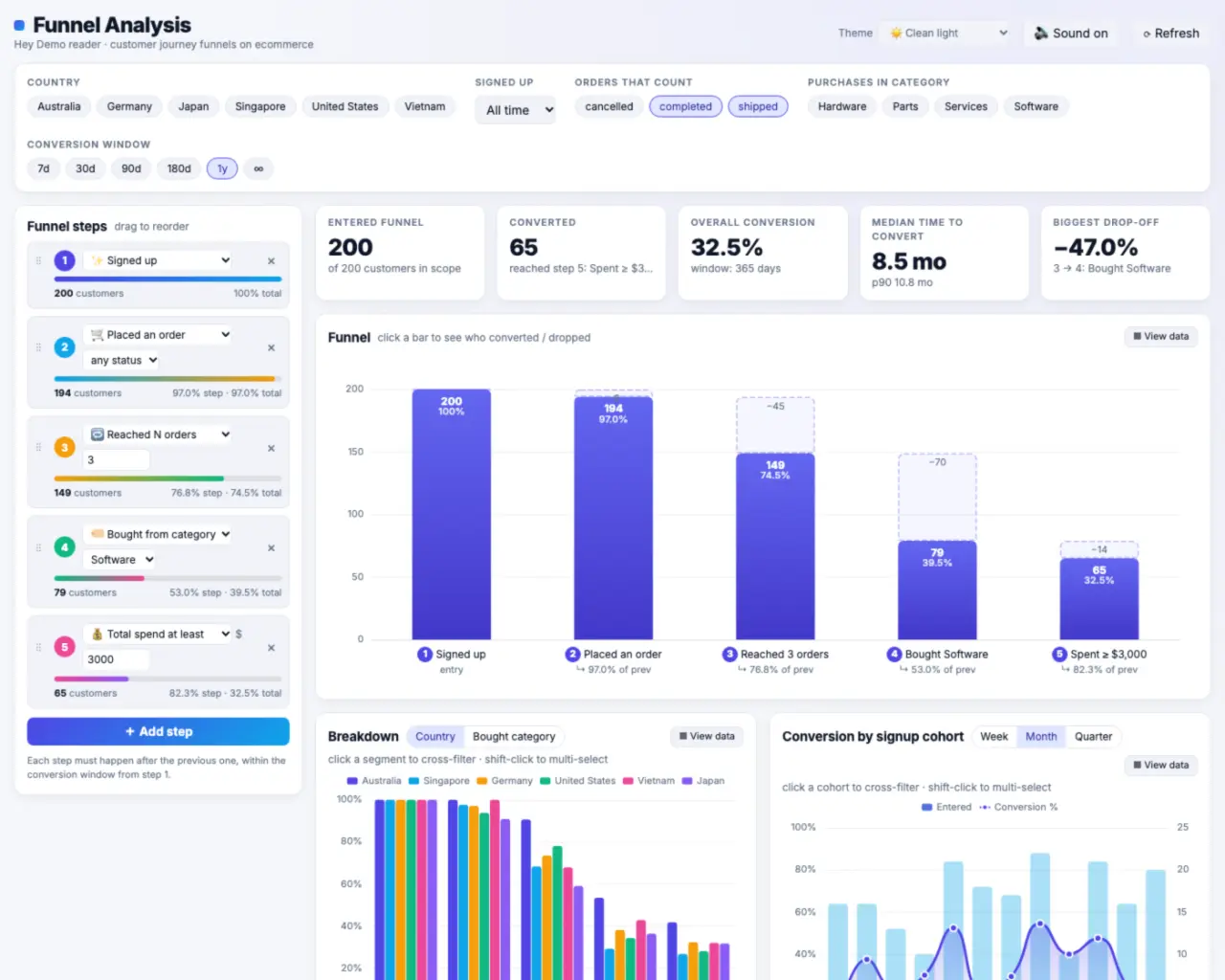
Anfra 0.17.0 adds a way to look behind an AI-built chart: open a point’s underlying data in a modal. The November 5 release installs that plugin in the app server and adds SDK support, alongside structured command output intended to make automation easier.
The framework, built by the team behind Holistics, targets custom business-intelligence apps made with coding agents. An agent writes HTML and JavaScript, while anfra’s SDK requests named metrics and the server turns interactions into warehouse queries. Models, datasets and metric definitions remain files for the team to review. The project pitches this as combining custom layouts with reusable, inspectable numbers; that is a design claim, rather than proof that every generated dashboard is correct.
The rows behind the picture
The new underlying-data plugin lets a user inspect rows associated with a chart point. The release also lists fixes that preserve a query’s own filters and declarations, sort underlying rows consistently across pages and offer a retry if loading fails. A command dialog for searching apps and commands is another addition.
For agents operating the command line, 0.17 adds JSON output support and structured responses for setup, authentication, initialization and publishing. There is a breaking SDK change: QueryError, PermissionError and TransportError are removed in favor of branching on error code and scope. Existing integrations should follow the release’s migration notes rather than assuming old class-name checks keep working.
Bring a coding agent and a warehouse
Anfra does not include an AI model. Its documentation names Claude Code, Codex and Cursor as coding-agent workflows, using skills and an MCP server to expose project models and metrics. The documented macOS/Linux installer is followed by agent setup, project initialization, warehouse credentials and a local server; a Docker route is also available. The README recommends a read-only database user and keeps the data-source configuration out of Git.
The Apache-2.0 framework can be self-hosted without a Holistics account. That does not cover the cost of the user’s coding agent or warehouse. Its built-in semantic foundation is AMQL; external layers such as dbt and Cube remain planned integrations in the versioned documentation.
The open-source server has no built-in login or per-viewer permissions. The project says to restrict access through infrastructure such as an SSO proxy; hosted anfra Cloud, with sharing and permissions, remains in development. Page JavaScript can also transform returned rows, so inspecting the server query does not by itself validate every number rendered on top of it. AITrending reviewed the release and documentation but did not connect a warehouse or reproduce the new plugin.