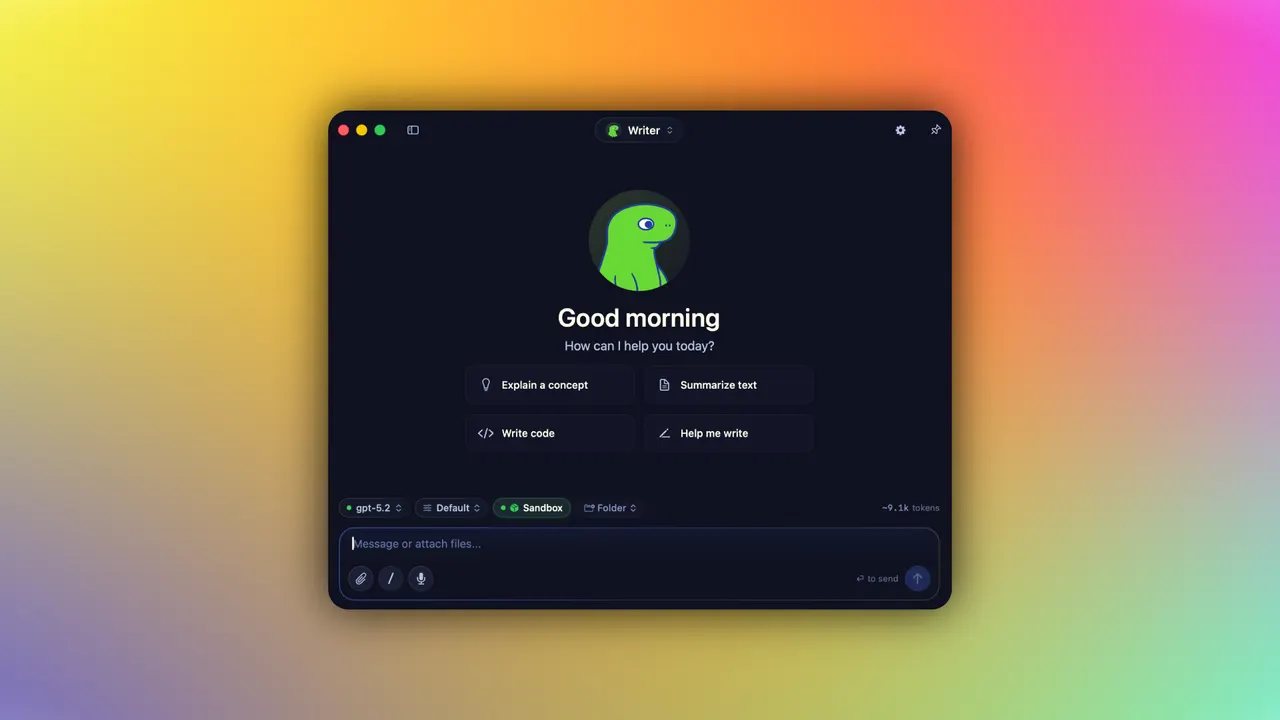
Context Mode 2.1 tackles broken hooks across Codex, OpenCode and Kiro
The local context plugin updates Codex hook trust and OpenCode 2 diagnostics, while adjusting to Kiro CLI 3.0. The hosted Gateway remains a separate product.
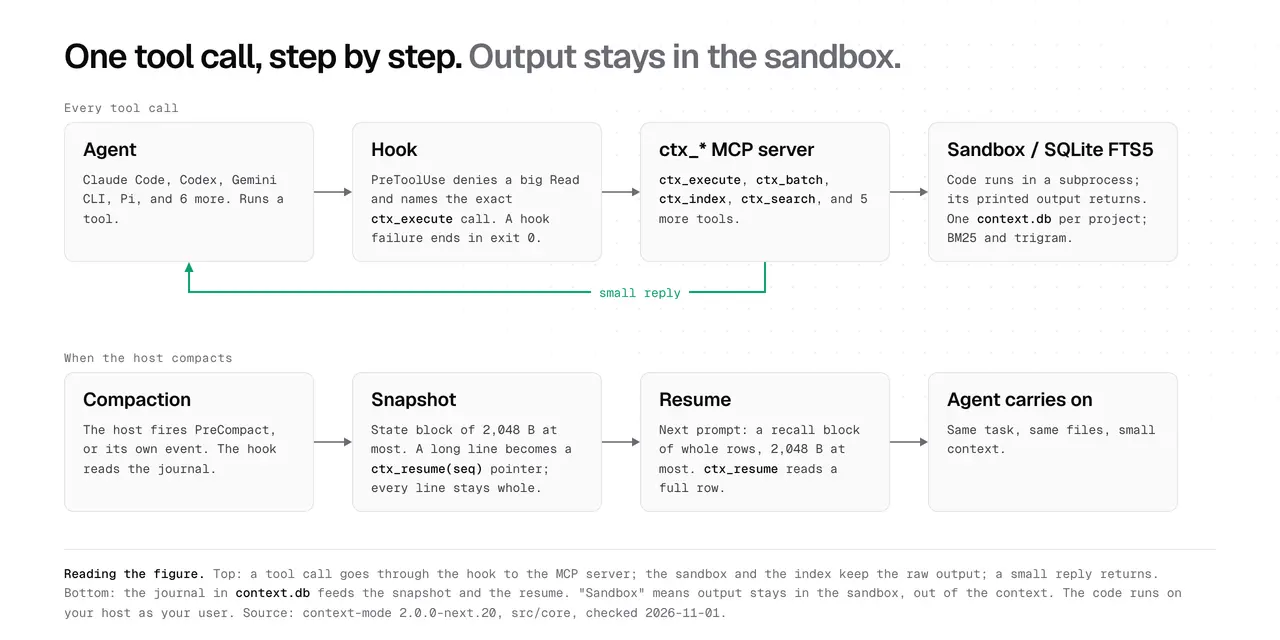
Context Mode 2.1.0 targets a frustrating coding-agent failure: a plugin can be installed while its hooks or diagnostic checks no longer match the host. The November 5 release documents fixes for Codex 0.166, OpenCode 2 and Kiro CLI 3.0, plus a clearer release plan showing which agents receive each update.
For Codex, the maintainer says setup now records both trusted_hash and trusted_content_hash so plugin hooks remain trusted across an upgrade. OpenCode diagnostics now locate the plugin’s own bundle directory, accept the 2.x plugins list and inspect the configuration actually loaded by the CLI. Kiro changes cover tool identifiers, stdin prompts, recall output and the KIRO_HOME rule. These are the project’s release claims; AITrending has not reproduced the fixes in each harness.
What the plugin does
Context Mode runs alongside an existing coding agent. Its documented workflow stores full tool output in a local SQLite index and returns selected answers or searchable chunks to the agent. It is a plugin, rather than a new model or standalone coding harness. The local plugin is free under a source-available license; the separately billed hosted Gateway routes requests through its own service.
The plugin requires Node 24.15.0 or later. Windows users also need Git for Windows because shell tools run through Git Bash. Existing users should follow their host’s update route: the release lists codex plugin marketplace upgrade context-mode for Codex, opencode plugin update for OpenCode and context-mode upgrade for Kiro. Codex also has a one-time npm/setup hook-trust step documented in the installation guide.
The project’s use of “sandbox” describes output handling: code still runs as the local user with access to that user’s files, network and environment. Its documentation explicitly recommends retaining the coding agent’s permission prompts. Local indexing does not establish operating-system isolation or eliminate model-provider charges.
Related reading
Flockbook brings Herdr agent chats to Linux—and previews a phone control page
Take your Codex chat to another model: aichat adds provider porting