A community LoRA squeezes Fibo 2.0 image editing into two steps
Akhaliq's adapter targets two network evaluations without classifier-free guidance, with downloadable weights and author-published editing comparisons.
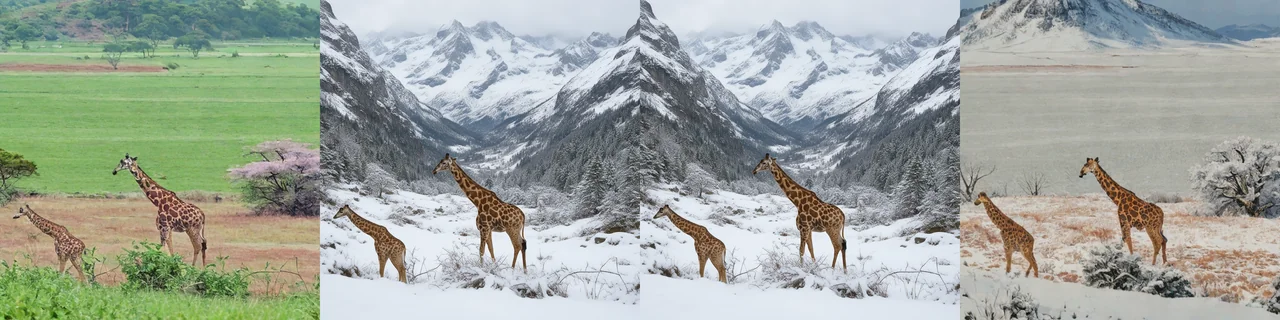
Fibo 2.0 Edit has a new community shortcut: a single LoRA adapter intended to edit an image in two network evaluations instead of the four used by its Turbo teacher. Akhaliq published weights and training-time comparisons on November 1, alongside an English setup guide for a three-way demo.
The adapter is a community implementation of Intrinsic Distribution Matching, applied to Bria’s Fibo-2.0-edit-turbo. It is not a new official Bria foundation model. The card describes two inference steps without classifier-free guidance, and a demo comparing the unmodified base run at two steps, the adapter at two steps and the four-step teacher with the same input image, instruction and seed.
Two evaluations, with quality still to measure
The English card says training uses LoRA branches on one shared base model, with the teacher accessed by disabling adapters. Its recipe describes 550 training steps on four H200 GPUs and 9,000 editing triplets from UltraEdit. Those are the author’s training details, not measurements reproduced by AITrending.
The numerical editing evaluation is not available yet. The reviewed card says MagicBrush test metrics are being computed. Halving the stated number of network evaluations does not establish a twofold end-to-end speedup or equal editing quality. Image loading, model setup, hardware and other pipeline work can affect elapsed time.
The published sample grids are also training-time examples, not a completed held-out comparison. They can help readers inspect the author’s intended behavior without establishing a broad quality win.
A gated base model and non-commercial terms
The usage example loads BriaFibo2Pipeline in Diffusers, loads the LoRA weights and supplies an input image plus an editing instruction, using num_inference_steps=2 and guidance_scale=1.0. Its example runs on CUDA with bfloat16. The card does not establish a minimum consumer GPU memory requirement.
The demo guide says the base model is gated: a self-hosted copy needs an HF_TOKEN with access already granted to the Bria model. Anonymous access to the base model’s raw README was restricted during review. The adapter card and demo declare CC BY-NC 4.0, non-commercial use, under the base model’s terms; this should not be treated as a commercially unrestricted release.
The author positions few-step editing around attribute changes such as color, expression, object swaps and style. Large structural changes remain difficult. The card also says masked and multi-reference editing were inherited from the base rather than explicitly distilled. For local image-editing experimenters, the news is a concrete, downloadable two-step route, with access requirements and quality questions still visible.