GitHub turns Copilot into a cross-repo project manager
Copilot projects enter public preview alongside multi-model Fusion orchestration and enterprise access billed through AI credits.
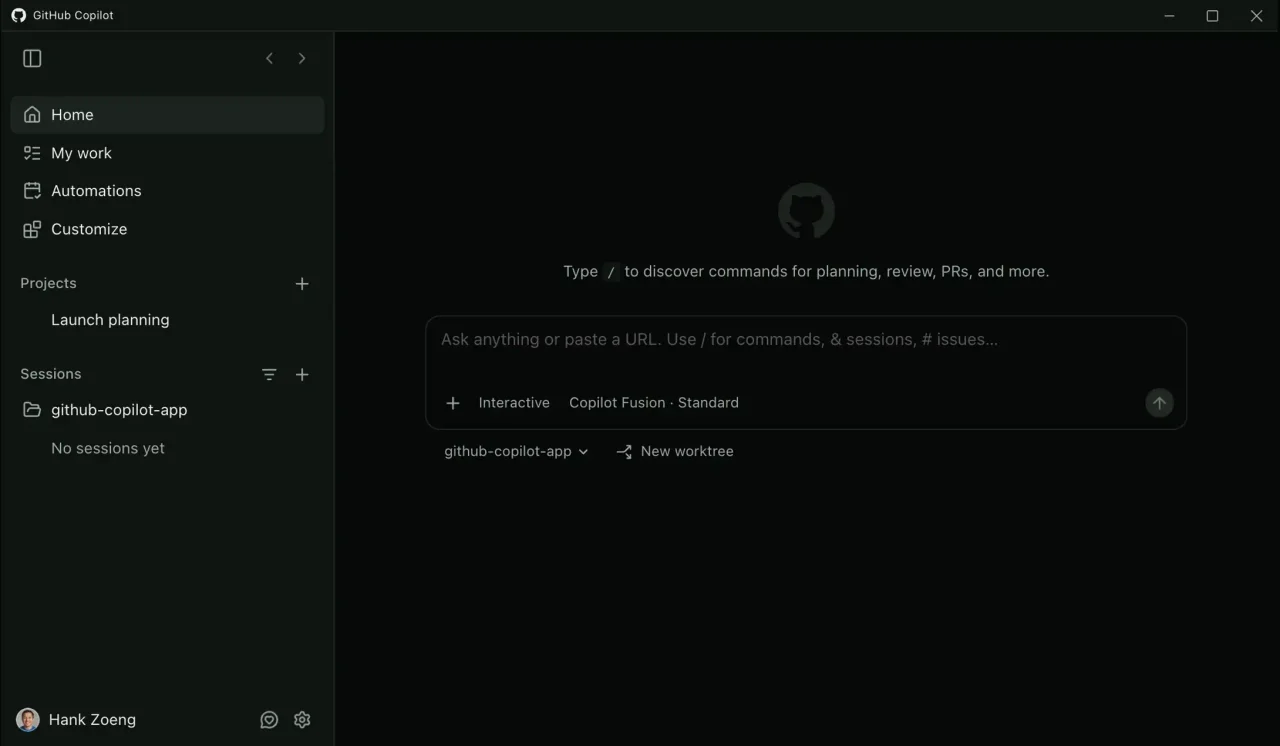
Give Copilot a goal across repositories, then follow the work from one project. That is the shift GitHub announced at Universe on October 28, bringing native projects into the Copilot app alongside model orchestration and recurring agent workflows.
The projects documentation labels the feature a public preview. A project can connect multiple repositories, share supporting files, produce artifacts and coordinate sessions over time. It can also handle work without a repository, such as analyzing a feedback document.
One place to steer the work
The project overview groups work into items needing input, open pull requests, active sessions and completed work. Users can inspect a session, review its changes and send further direction. Recurring tasks can be scheduled through the project’s conversation and managed in its Automations tab.
That creates a broader workflow than handing an agent one isolated coding task. It does not establish that every requested change will succeed or that a human no longer needs to decide what ships.
Fusion chooses models and execution patterns
GitHub also introduced Copilot Fusion as a router and orchestrator rather than another base model. Its documentation describes single-model execution, a draft-and-judge cascade, and a critique pattern in which several models review a draft before revision.
Model availability remains subject to the user’s plan and administrator policies. Fusion bills each model it uses at that model’s rate, so additional review calls can consume more AI credits. The docs also warn that discarding a draft does not automatically undo workspace edits it already made.
Access still has conditions
GitHub says Enterprise customers can now access Copilot features without purchasing a separate Copilot subscription, through GitHub Sales, with self-service coming later. They still pay for the AI credits they use; this is not unlimited free inference.
At review, the public product page offered a macOS Apple Silicon download. The official interface image accompanying this report is a vendor-provided demonstration, not an AITrending installation or proof that every pictured platform is publicly downloadable.
The announcement establishes a new project-level coordination surface. Its effectiveness and GitHub’s performance comparisons remain vendor claims that AITrending has not independently reproduced.