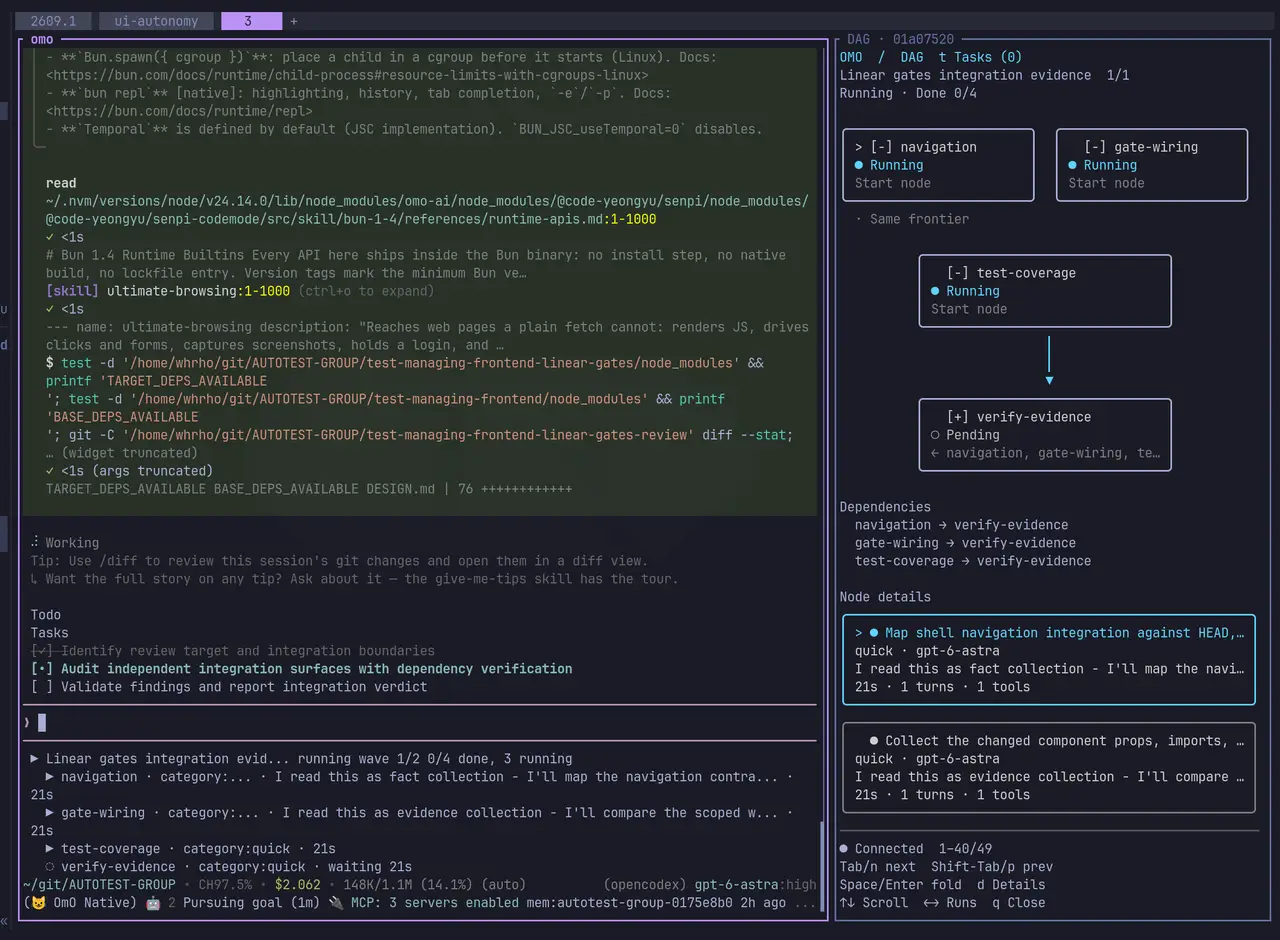
OmO tells its architect to fix the code, and rolls back higher reasoning defaults
Version 5.1.60 changes the architect task's instructions from advice to implementation and verification, while restoring reasoning settings from before 5.1.59.
OmO’s architect task is being told to carry a requested fix through to a verified result instead of stopping at a design proposal. The community coding agent’s November 3 release changes the category’s description and child prompt, addressing a mismatch between the work its instructions encouraged and the tools it already had.
Version 5.1.60 also reverses the reasoning-default increase shipped in 5.1.59. The daily profile returns Claude Opus 5.5 to medium effort; other affected routing entries return to their previous medium or xhigh settings. That is a restoration of earlier defaults, not a new model release or a demonstrated speed or cost improvement.
The tools were already there
The merged architect pull request explains that category tasks already inherited the parent’s full tool set. Earlier prose described the child as a consultant rather than an implementer, encouraging callers and models to treat the category as advisory.
The new wording explicitly supports broad debugging across code, logs, Git history, issues, documentation, configuration and runtime evidence, then making and checking a needed change. A caller seeking only a design write-up should mark the task advisory-only. Model routing is unchanged.
This is an instruction change, not the removal of an enforced read-only permission boundary. The maintainer’s QA used a real task runtime with mocked model responses; both the before and after runs could edit a file. That establishes the tool surface and delivery of the revised prompt, while leaving live models’ behavioral response unmeasured. AITrending has not independently run the application.
Installing the matching release
OmO is the standalone omo application built on senpi, its maintainer’s Pi fork, and is distinct from the older OpenCode edition. The release documents bun add -g omo-ai; the matching npm package is version 5.1.60 and requires Node 24 or newer. Its command is omo, and the unrelated npm package named omo is a different product. The tagged README also documents native installation for Windows and Unix-like systems.
Provider sign-ins, subscriptions and inference charges remain separate from installing the harness. The source uses the Sustainable Use License, allowing internal-business and personal or non-commercial uses under its terms, rather than an unrestricted permissive license.
For users delegating complex repairs, the practical change is straightforward: architect now describes a lane that can investigate and implement, while an advisory-only request remains an explicit choice. The release supplies that workflow change without claiming a new benchmark result.
Related reading
OmO stops failed child tasks from borrowing the parent model
OmO 5.1.48 tackles stalled turns and nested-agent task recovery