Google's Universal Cart launches in the US across Search and Gemini
The cross-retailer cart keeps saved products together, watches prices and stock, and surfaces payment perks while leaving shoppers in charge of checkout.
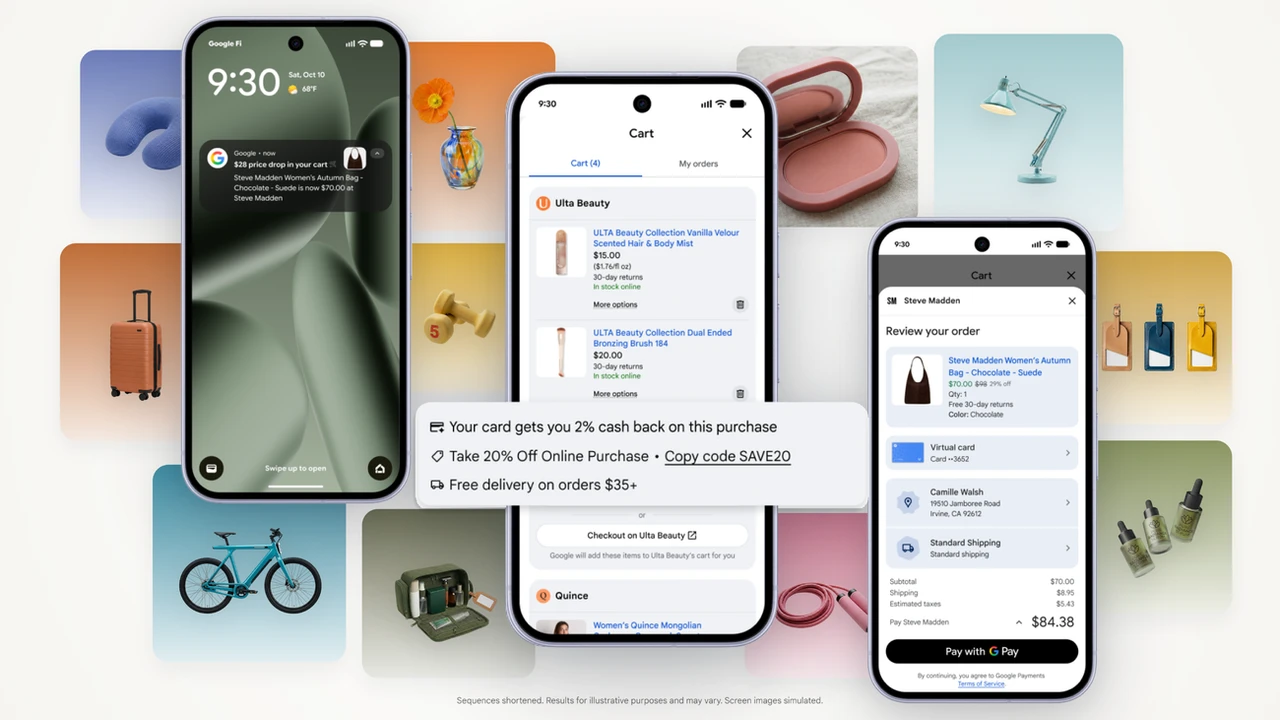
One place for products found across Google
Google began rolling out Universal Cart in the United States on October 15 across Search and the Gemini app. The tool lets shoppers save products from multiple retailers and return to their shopping progress later. TechCrunch notes that Google previewed it at I/O in May; today’s development is the US rollout, rather than the first announcement of the idea.
The concrete appeal is continuity. A product saved in AI Mode in Search can sit beside items found in Gemini, reducing the need to reconstruct a shopping list from tabs and screenshots. Google says the cart also sends notifications when a saved item’s price falls or an unavailable product returns to stock.
AI assistance still ends at a shopper’s choice
Google describes reasoning that helps identify relevant promotions and choose between payment methods using card benefits available through Google Wallet. Those are product capabilities described by Google, not a guarantee that the cart always finds the cheapest offer or optimal payment option.
Checkout has two routes: pay with Google Pay inside the cart at supported merchants, or transfer items to a merchant’s cart to complete the purchase on that site. Google names retailers including Nike, Sephora, Target, Ulta Beauty, Walmart and Wayfair, along with many Shopify merchants. It does not say that every retailer or item supports every checkout route.
The company says merchants remain the sellers of record and provide direct order confirmations and customer support. Universal Commerce Protocol powers the simplified checkout experience. The launch concerns a shopping tool that users control; it does not establish that an agent can independently spend money without a checkout decision.
A rollout with a defined geographic scope
The reviewed announcement specifies the United States, not worldwide availability. It does not establish a date for other countries. Google positions the cart as a practical companion to its broader agentic commerce work, with saving, monitoring and purchasing connected across its products.
AITrending reviewed Google’s English announcement and TechCrunch’s report but has not completed purchases or tested price alerts. Google’s accompanying interface artwork explicitly labels its screen images as simulated and its results as illustrative.