Give every coding agent its own filesystem: LayerFS 1.0 ships
The community release adds in-process file operations, automatic workspace placement and a DeepSeek Harness history view, with a source-only installation.
LayerFS 1.0 gives parallel coding agents a complete writable filesystem view of their own, while keeping their work in shared commit history. Ephemeral AI Lab published the first official release on October 21 after its 0.1.x developer previews. The pitch is practical: fork a branch, work with dependencies already present, save changes, then discard the workspace.
The release changes how that workflow runs. File, branch and project operations now open the SQLite Store directly inside the calling process, without starting a Sandbox. Bash commands still use a mounted workspace: mount, execute, commit and unmount. The new workspace.mount(branch) API places workspaces into numbered Sandboxes automatically, opening another when each running one holds 16 workspaces. Each Sandbox runs one image and closes after two idle minutes.
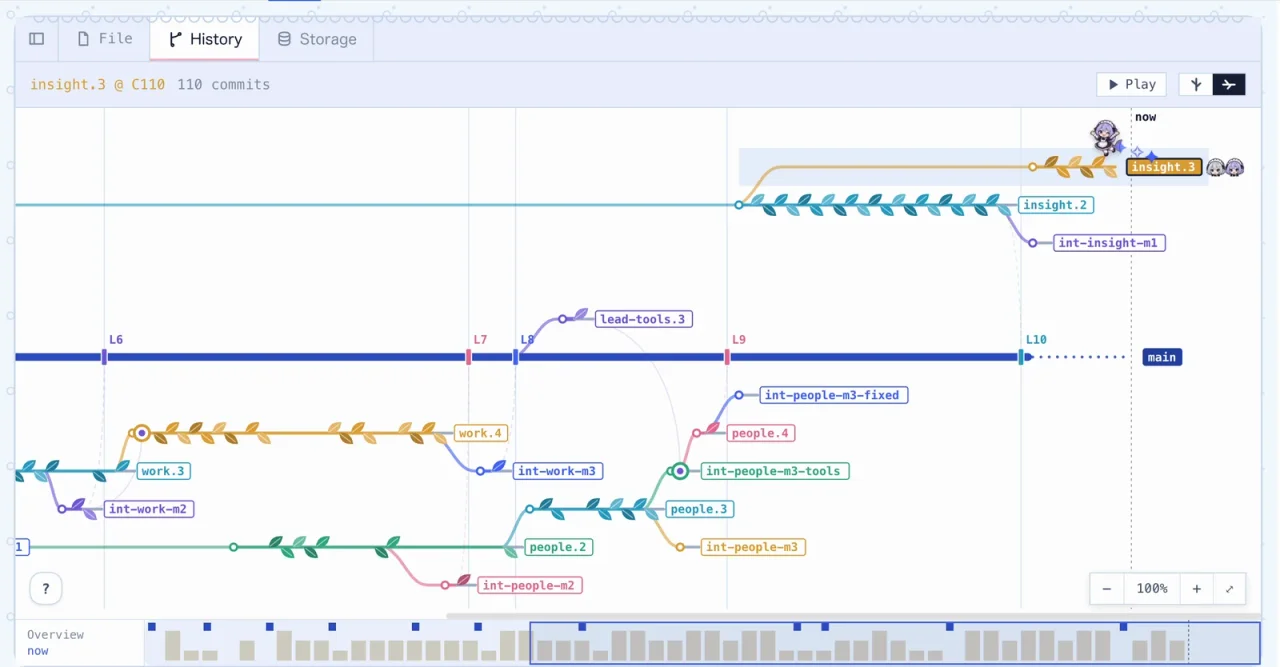
A history view inside DeepSeek Harness
The dsh-layerfs bundle adds Work and History tabs to DeepSeek Harness web, showing agent branches, files, commits and Sandboxes. It is a plugin that changes no DSH code. DeepSeek Harness is the host application; model access still needs its normal sign-in or keys. LayerFS does not provide free model inference.
This remains a build-it-yourself installation. The release supplies no npm package, prebuilt binary or public image. The general SDK route requires Linux, Docker, Node 20 or later and a Store on local ext4, xfs or btrfs. The DSH guide requires Node 22.19 or later, pnpm, a built harness checkout and Docker, including Docker Desktop on macOS. Its macOS route executes Store calls inside a Linux container. Only DSH web is supported by the installation guide; desktop was not tested.
Installation builds a native addon, Linux daemon and runtime image, then links the bundle into a fresh DSH profile. The configured Docker socket and writable workspace environment are meaningful permissions. Users upgrading must rebuild matching SDK, addon and daemon versions; Stores from 0.1.7 or earlier are refused and need reinitialization.
Disposable means disposable
The release explicitly has no crash or power-loss durability in its only running Store profile. Keep another copy of anything that cannot be rebuilt. Better merge handling and paged command output are useful additions, but do not turn this into a proven backup filesystem.
The same-day Hacker News thread asks how LayerFS differs from established filesystems and questions its maturity. Those are community opinions, not established defects. AITrending reviewed the English release and installation sources, but did not build or benchmark LayerFS. Its MIT-licensed source and concrete harness integration make it a relevant multiagent workflow experiment, with the storage limitation central to any trial.
Related reading
AndroidHarness brings installable agent plugins to your phone
Kortix makes pi the default agent harness and puts runaway automations on pause