Kortix makes pi the default agent harness and puts runaway automations on pause
Version 0.14.4 routes project models through one gateway and starts eligible new sessions on pi. Existing sessions keep their harness, while new cron triggers skip overlapping runs by default.
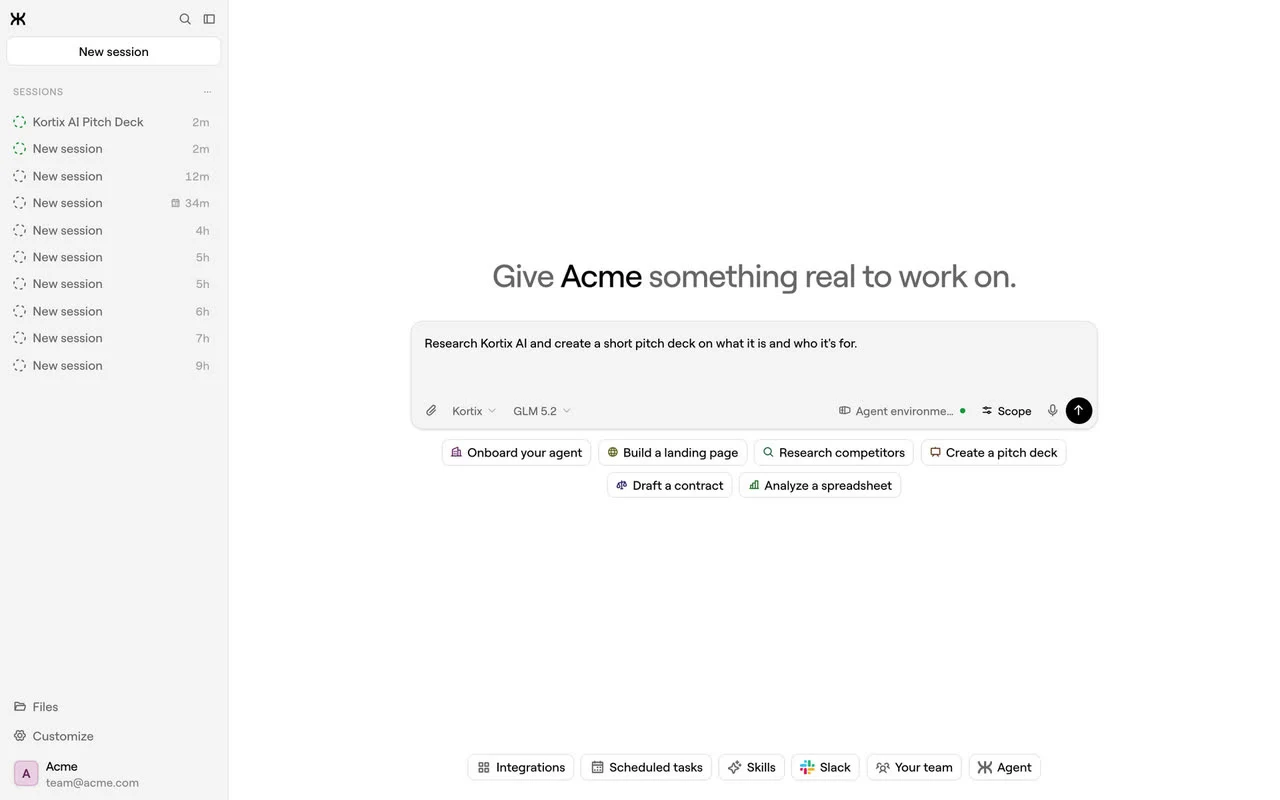
Kortix is changing the engine behind new agent sessions: its October 21 release makes pi the default harness for eligible projects, alongside one model gateway and new controls for runaway schedules. Version 0.14.4 is a concrete update to the platform hosted in the kortix-ai/suna repository, which markets itself as an AI Operating System for teams.
The harness switch has boundaries. New sessions start on pi unless the project turns pi_harness off. Existing sessions keep their current harness, and projects with the LLM gateway disabled remain on OpenCode. It is not a forced migration of every conversation, nor a new model from Kortix.
One model route, with a different agent underneath
The release notes say project models go through the Kortix LLM gateway, including custom OpenAI-compatible endpoints configured as custom providers. The gateway is the routing layer; pi or OpenCode is the harness that runs the agent’s tool-using workflow. A provider such as DeepSeek or OpenAI is a separate choice from that harness.
The change also brings practical pi fixes: the model receives today’s date on every turn, the Changes tab works for pi sessions, and Kortix owns the conversation title. The broader README and product page still describe OpenCode-based agents, so the version-specific release notes are the clearest guide to which new sessions actually use pi.
Scheduled jobs get two brakes
A trigger that stays at its hourly run limit for two hours pauses itself and sends one alert. Resuming it requires setting enabled: true. This is a bounded protection against repeated triggering, not a guarantee that every expensive job will be stopped before it incurs cost.
A newly created cron trigger also skips a scheduled fire when its previous run is still active. Projects can opt out with overlap: allow. For teams running recurring research, reports or code maintenance, that changes whether a slow job silently accumulates parallel copies.
The release additionally introduces one Drive with team folders, kortix drive in the CLI, and shared session/workspace/settings screens through @kortix/ui.
This is a platform, not a pi plugin
Kortix’s documented workflow installs its CLI, creates a project with kortix init, and sends it to managed cloud with kortix ship. Its self-host route uses kortix self-host start and Docker images. Sessions get isolated Linux sandboxes and branches; proposed repository changes land through a change request a person reviews. Connected applications and granted secrets still give agents real access.
Self-hosting is offered without a platform charge, but compute, model-provider usage and integration requirements still matter. Managed cloud uses paid credits. The README says tool approval gates are off until configured; repository change review does not automatically require approval for every external tool call.
Despite the project’s open-source branding, the release’s root license is Elastic License 2.0, which restricts offering a substantial feature set as a hosted or managed service to third parties. It is source-available rather than a permissive-license pi distribution. AITrending verified the published release and documentation, but has not installed it or tested the trigger safeguards.