Liquid AI's LFM3 brings eyes, ears and tool calls to a compact local-model family
Downloadable text, vision, audio, omni and decision checkpoints share a compact backbone; the 1.7B text model targets local agents rather than complex coding jobs.
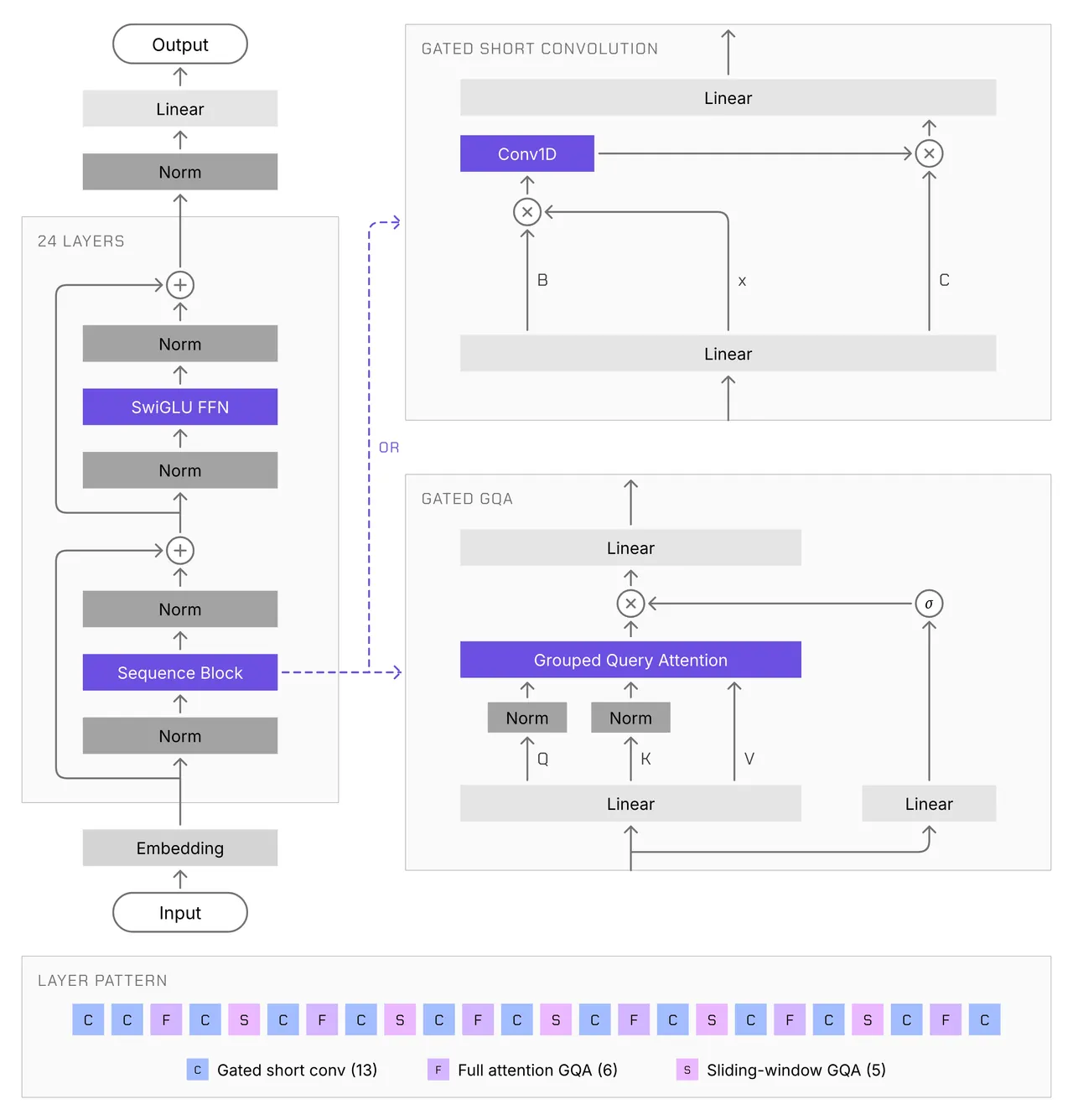
Liquid AI announced LFM3 on October 27, giving local-AI builders a compact family that spans text, images, video, speech and structured decisions. The release includes a 1.7B-class text model, separate vision and audio models, the company’s first omni model, and two decision models. The checkpoints are available on Hugging Face; the launch is distinct from the earlier creation of individual model repositories.
The appealing part is the choice of workload. LFM3-Omni-2B accepts text, images, video and audio and can produce text or speech, according to Liquid AI. The vision model adds video input. The d1 variants target structured answers with probabilities rather than free-form conversation. Liquid says each family member can be fine-tuned on a single GPU, and supplies notebooks for tasks such as receipt extraction and spoken smart-home commands. These are the developer’s capability claims, not AITrending test results.
For a small local agent, LFM3-1.7B offers a documented 256K-token context window and tool calling. Liquid says its 4-bit form takes about 1 GB of memory; that figure is not a guarantee that a complete agent with a long context fits into 1 GB. The model card lists GGUF for compatible llama.cpp, Ollama and LM Studio runtimes, MLX for Apple Silicon, and GPU options including Transformers. Its Transformers example enables trust_remote_code, so users should inspect the repository code before running it. The weights supply a model; a host application still executes tools and controls their permissions.
There are two practical boundaries. Liquid’s own text-model card does not recommend it for agentic coding or complex multi-step reasoning. Its LFM Open License v1.0 also restricts commercial use by entities exceeding a $10 million annual revenue threshold. Downloadable weights do not mean unrestricted commercial terms.
Public Hacker News discussion reflects both enthusiasm and friction: readers discuss annotation and home-assistant workloads, while some report loading problems with particular local runtimes. A contributor who says they worked on the release advises against software-engineering-style tasks. Those comments are individual experiences, not a controlled evaluation. LFM3 is worth assessing for narrow local workflows, with checkpoint compatibility and task-specific quality checked before replacing an existing setup.
Related reading
NVIDIA's Nemotron 3.5 retrieval stack targets better evidence and fewer agent tokens

PortOS adds shot-by-shot rendering to its AI music-video studio