Motive launches fleet agents that turn fault codes and safety alerts into action
Motive customers can configure fleet triggers and actions now. The more ambitious voice-agent outreach and plain-language goal setting have later rollout dates.
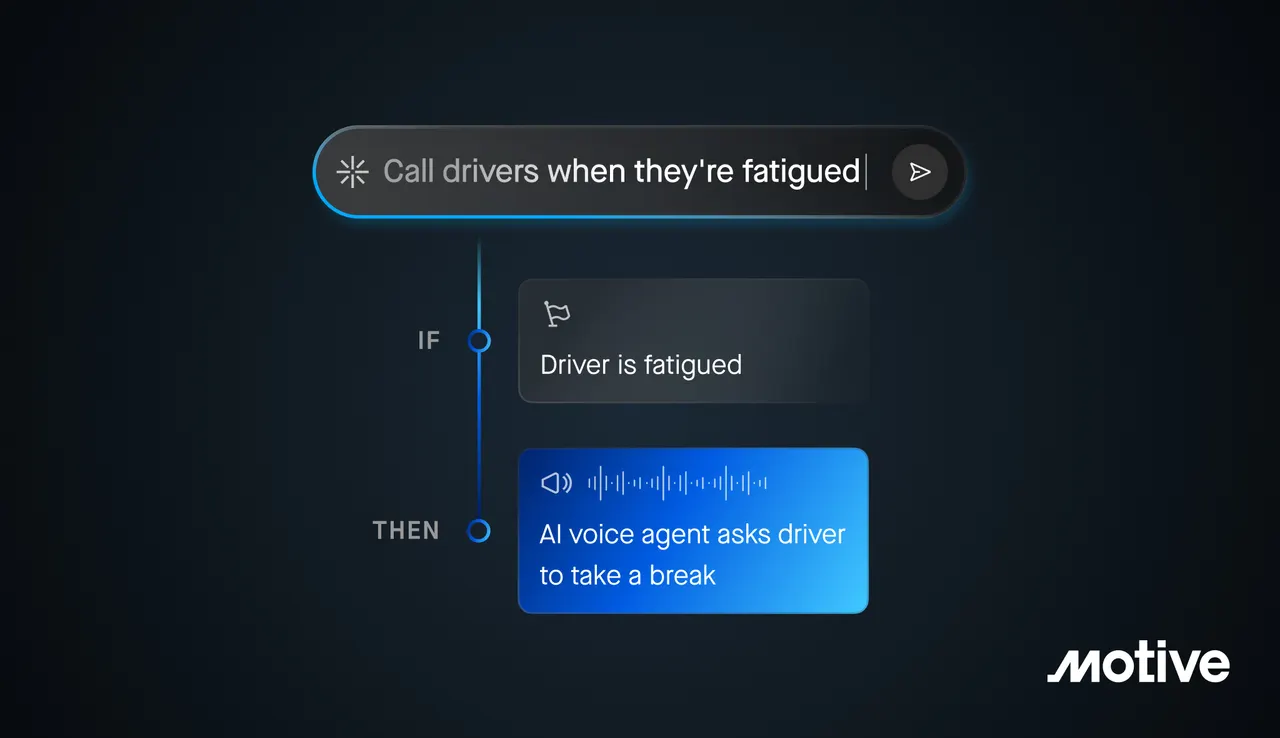
Motive wants fleet software to do the follow-up work after an alert, instead of adding another item to a manager’s queue. The company announced Agents on October 19, saying customers can now configure conditions and actions across vehicle safety, maintenance and operations.
The practical hook is a connection between data a fleet already collects and work somebody otherwise has to coordinate manually. Motive’s examples include creating a maintenance work order when a vehicle fault code meets a fleet’s criteria, marking that vehicle out of service, notifying managers and prompting drivers about excessive idling. These are company-described capabilities; the launch does not establish measured reductions in collisions or downtime.
Workflows now, broader autonomy later
Motive’s English product blog says customers currently choose what an Agent watches and how it responds. Teams can start from templates for areas such as idling, fault codes and fatigue, then combine triggers and actions. The company describes notifications through email, SMS, app alerts and in-cab voice messages.
That last channel should not be confused with the fuller voice-agent experience. The blog explicitly places voice-agent outreach through AI Dashcam Plus later in 2026. Its examples of Atlas calling a tired driver, explaining a fault code or connecting a manager illustrate the proposed workflow; they should not all be read as immediately shipped features.
The headline ambition also has a separate date. Describing a workflow in plain language, setting an outcome such as fewer collisions and letting Agents determine the steps, and choosing from a no-configuration library are scheduled for early 2027 in the product blog. Today, the customer still defines the conditions and actions.
A fleet product, with fleet-specific dependencies
Agents are available to Motive customers, who are directed to their representative to get started. The announcement does not provide a public price. Maintenance examples use Motive Maintenance, while in-cab examples refer to AI Dashcam Plus; the sources do not establish that every customer has every required product or entitlement.
Motive is demonstrating the service at the American Trucking Associations’ Management Conference and Exhibition in Charlotte. For fleet operators, the immediate development is configurable follow-through on operational signals. The promise of agents that accept broad goals and work out their own response remains a dated product plan.
Related reading
Harness2 turns agent runs into reusable harness edits, drawing a fresh debate
Lead Green opens a GPU energy index that AI assistants can query