Simantic gives AI coding agents a virtual board to test firmware
Its Launch HN presentation pairs cloud microcontrollers with a GitHub reviewer, aiming to shorten the gap between generated firmware and evidence that it works.
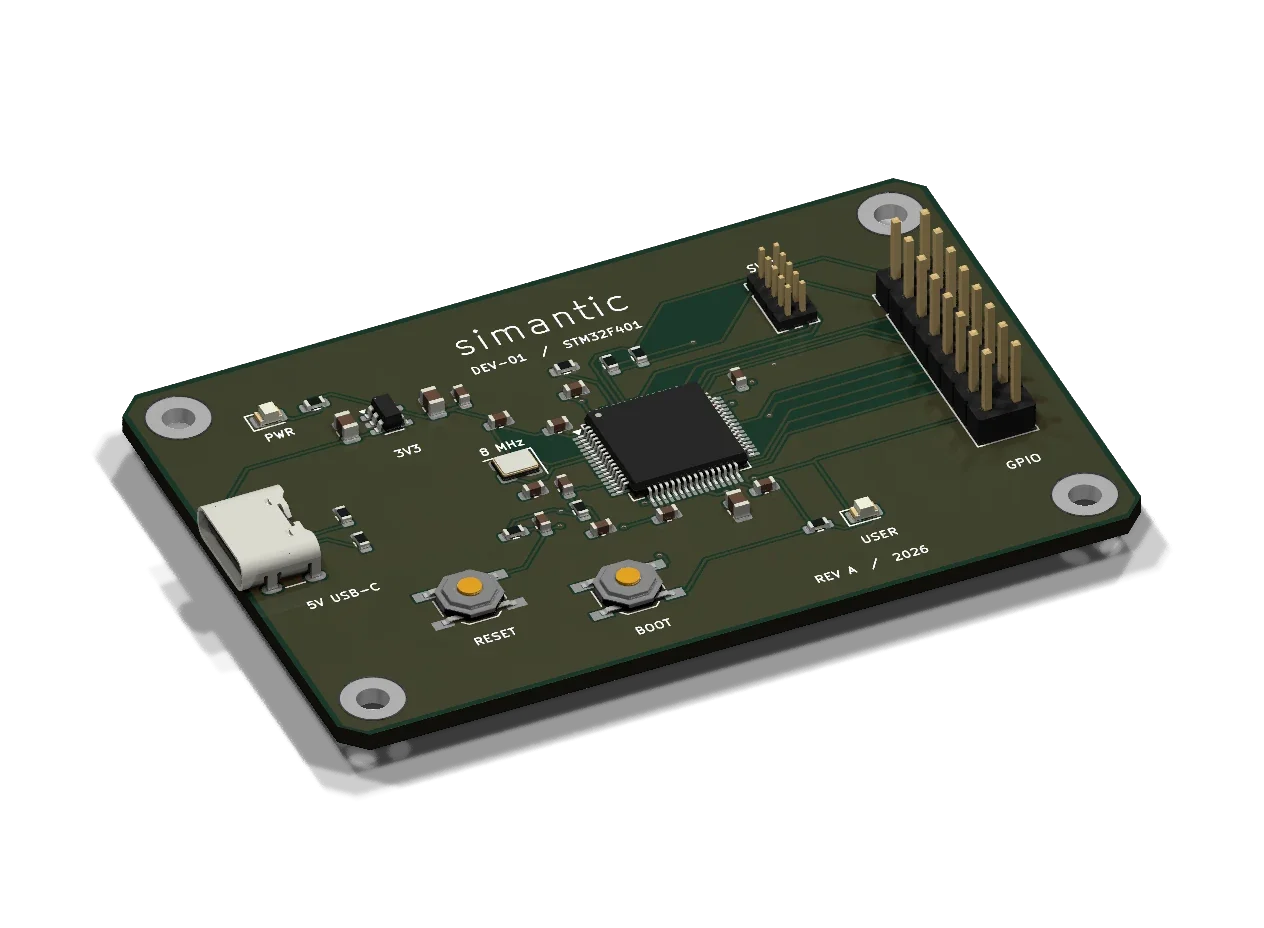
An AI agent can write embedded code quickly. Simantic wants it to test that code without waiting for someone to flash a physical board. In an October 29 Launch HN post, the founders presented a cloud simulator, local execution and a GitHub firmware reviewer built around virtual microcontrollers.
The useful shift is in the feedback loop. Instead of relying only on a model reading a diff, Simantic says its bot builds the firmware, designs simulation scenarios from the change and posts what it tested, what it found and suggested fixes. Its product page illustrates that workflow with an LED register mistake and recorded pin behavior. That is the company’s demonstration, not an AITrending reproduction.
An execution tool for an existing agent
Simantic is a simulator and review service, not a new language model. Its cloud API takes a compiled ELF, an MCU choice and run options, then returns UART output and the simulation engine’s console. Calls require a bearer credential or dashboard session. The founders say the cloud service is available now, with a paid local license also offered.
The local sim binary supports Apple Silicon macOS and x86-64 Linux, requires Python 3.12 or newer with its shared library, and directs Windows users to WSL2. Installation is documented through the company’s installer or Homebrew. sim models lists the parts supported by that binary, including release status; a chip family name should not be read as support for every member or peripheral.
Local does not mean disconnected. The CLI documentation says each run validates saved credentials with the backend. It also describes mandatory usage reporting containing command options, run metadata and the ELF’s size and hash, while saying the firmware and UART output are not sent. Board files can execute Python peers; the documented --no-scripts option refuses them.
The cloud has different data handling. Its API specification says run firmware is retained encrypted for downloading and rerunning until deleted or storage is disabled. The same policy covers firmware built for pull-request reviews. Teams considering proprietary embedded code need to account for that upload and retention behavior.
What the launch establishes
At review time, Community includes $10 in monthly credits and three concurrent simulations. Developer is listed at $100 monthly, or $1,000 billed annually, plus tax, with $200 monthly credits and ten concurrent runs. These are credit allowances and plan limits, not a promise of unlimited free tests.
The founders describe a Rust simulation engine and hardware rigs that compare results with real silicon. A reply says their silicon-validation benchmarks have not yet been published. The validation page similarly sets out a standard the team is working toward: compare the same firmware on hardware and simulation, investigate mismatches and expose coverage gaps.
That leaves accuracy, timing fidelity and application-specific coverage as questions to evaluate. The immediate news is a practical route for AI coding workflows to obtain simulated execution evidence. A successful virtual run is not certification that a flight controller, vehicle or production board is safe.
Related reading
Wicked Studio 0.14 lets you steer coding-agent jobs by voice