NVIDIA puts 2,000-plus simulation-ready assets on Hugging Face
The free, ungated OpenUSD library spans robot arms, grippers, racks and cooling equipment, with profiles describing which simulation capabilities each asset supports.
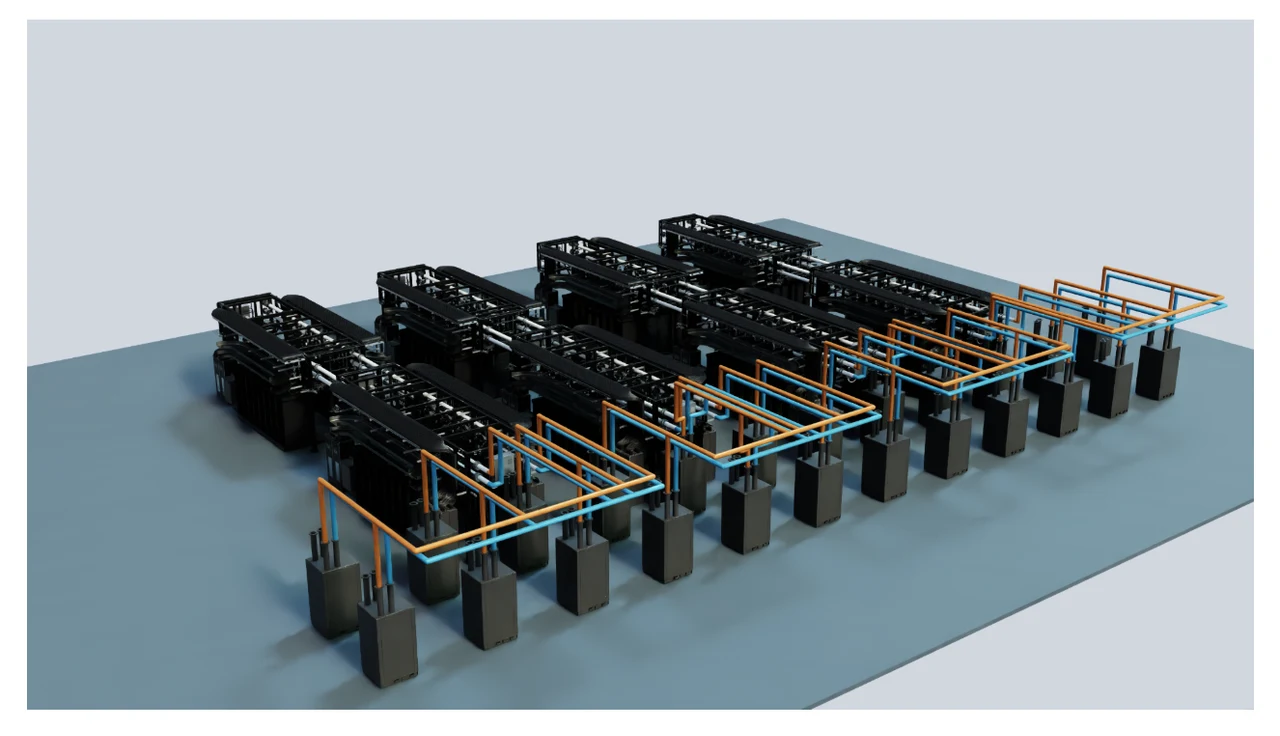
NVIDIA says SimReady Central now brings together more than 2,000 simulation-ready OpenUSD assets on Hugging Face, giving robotics developers and AI-factory teams a free, ungated starting point for building virtual environments. The collection ranges from robot arms and grippers to warehouse equipment, server racks and cooling infrastructure.
The October 21 announcement addresses work that an attractive 3D model alone does not finish. Simulation may require collision geometry, mass, friction, joint limits, semantic labels or sensor-related properties. SimReady profiles specify the capabilities an asset is prepared to support, so developers can select for a particular task instead of assuming every model supports every simulation.
Find assets, then build a scene
NVIDIA USD Search provides natural-language discovery across participating Hugging Face datasets. NVIDIA describes using search and scene-authoring tools with an AI assistant to assemble a robotic pick-and-place workcell or compare alternative layouts of racks and cooling equipment.
Those examples are authoring workflows and illustrative scenes, not published proof that an arbitrary generated workcell operates correctly or that a proposed data-center layout meets thermal requirements. The announcement’s example prompts ask for scripts, asset versions and runtime versions so a developer can reproduce and inspect the result. Application-specific tests and simulation remain separate work.
OpenUSD composition also lets developers keep scenario changes in separate layers, reusing source equipment across layouts. Robots can be evaluated with varied object placements; factory scenes can be connected to equipment data and suitable analysis tools.
A catalog with reviewed, fixed versions
The submission repository stores indexes of exact asset-package versions in OEM-controlled Hugging Face datasets, rather than copying every asset into one repository. Its English guide says public, ungated datasets are required for catalog review. Packages enter the catalog only after NVIDIA reviews and merges the submission.
An asset record can expose its owner, version, license, validation and benchmark results. Free discovery does not establish one common license for every supplier’s content; developers should inspect the selected package’s terms and capabilities.
For OEM submission, the reviewed guide specifies Python 3.12 on 64-bit x86 Windows 10/11 or Linux, around 40 GB of free disk space, and separate submission and Isaac Sim environments. Its setup pins Isaac Sim 6.1.0.0. Those are the documented submission and benchmark requirements, not a claim that simply browsing the library needs that installation.
The useful change is a shared route from discoverable equipment to versioned simulation inputs. NVIDIA’s asset count describes the library’s announced inventory, while the suitability of any particular asset still depends on its profile, package evidence and target runtime.
Related reading
Loova brings product shoots and video ad workflows into AI agents through MCP
OpenVLHarness says visual memory and tools can beat simply thinking harder
