Sudo Code adds a stop point for tool loops and durable task handbacks
The Rust agent's v0.2.33 release includes a configurable execution-round cap and negotiated recovery of completed child and background tasks for ACP clients.
Give an agent loop an explicit stopping point
Sudo Code v0.2.33 includes maxSteps, a setting that stops new tool rounds and asks the model to finish with the evidence it already has. The October 17 release also incorporates durable completion delivery for child agents and background terminal jobs through its ACP integration. These are workflow changes in the Rust agent, not a new foundation model.
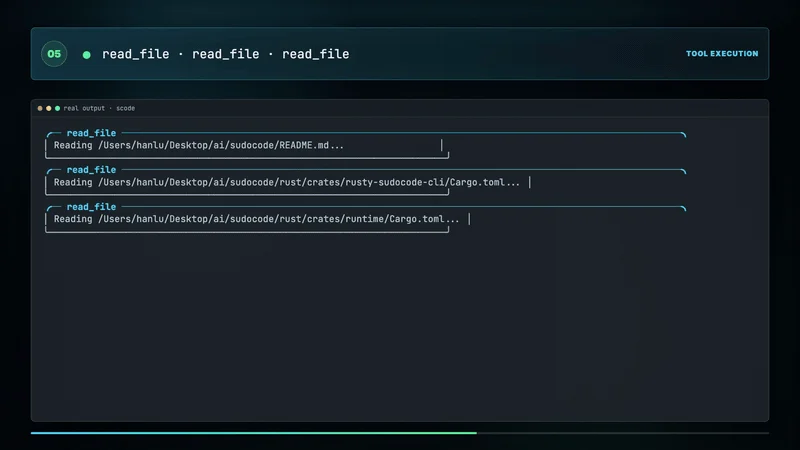
The tagged usage guide gives {"maxSteps": 5} as an example in .nexus/sudocode/settings.json. One step means one completed model/tool round: several tool calls in a single model response count together. Once the last round’s results arrive, the agent sends a request without tools and asks for a final answer that identifies unfinished work and concrete next steps.
That is an execution-round budget, not a hard bill or wall-clock limit. The final answer is an additional model request outside the budget, each new user turn gets a fresh allowance, and already-started background work is not cancelled. Omitting the setting leaves execution unlimited. These distinctions matter for users trying to control a loop rather than simply interrupt it after the fact.
Recover results without silently repeating the work
The ACP documentation separately describes opt-in completion extensions with an on-disk journal, stable completion IDs and acknowledgements. Supported native-storage clients can recover and acknowledge completed direct child or background terminal results after reconnects or process restarts. A competing writer is rejected, and replay does not rerun a command or restart a child.
The contract has boundaries: clients must negotiate the extension, unconfirmed execution remains unconfirmed, and the documentation does not promise exactly-once model execution or power-loss durability. AITrending reviewed the tagged contract and actual version comparison, but has not reproduced the recovery behavior in a live editor session.
Sudo Code runs as the standalone scode command or through ACP for an editor or Sudowork. Its README documents a macOS/Linux installer, release downloads for Windows, and MIT licensing. An installed copy can select this release with scode update --version v0.2.33. Inference still needs supported subscription, proxy or API credentials, with any provider charges separate from the software license.
The permission guide documents danger-full-access as the runtime default, alongside explicit read-only and workspace-write modes. Adding a round limit does not change those tool permissions or turn the agent into a sandbox. The practical upgrade is more control over when a tool loop ends and how finished background work reaches its controller.
Related reading
AlpineCode brings Claude Code and Codex conversations into its Mac desktop
AgenC fixes the dead end when a coding agent needs network approval