Tolan raises $30M to turn its AI companion into an everyday helper
The startup formerly called Portola plans its first free tier as its voice-first characters move further into household organization and practical assistance.
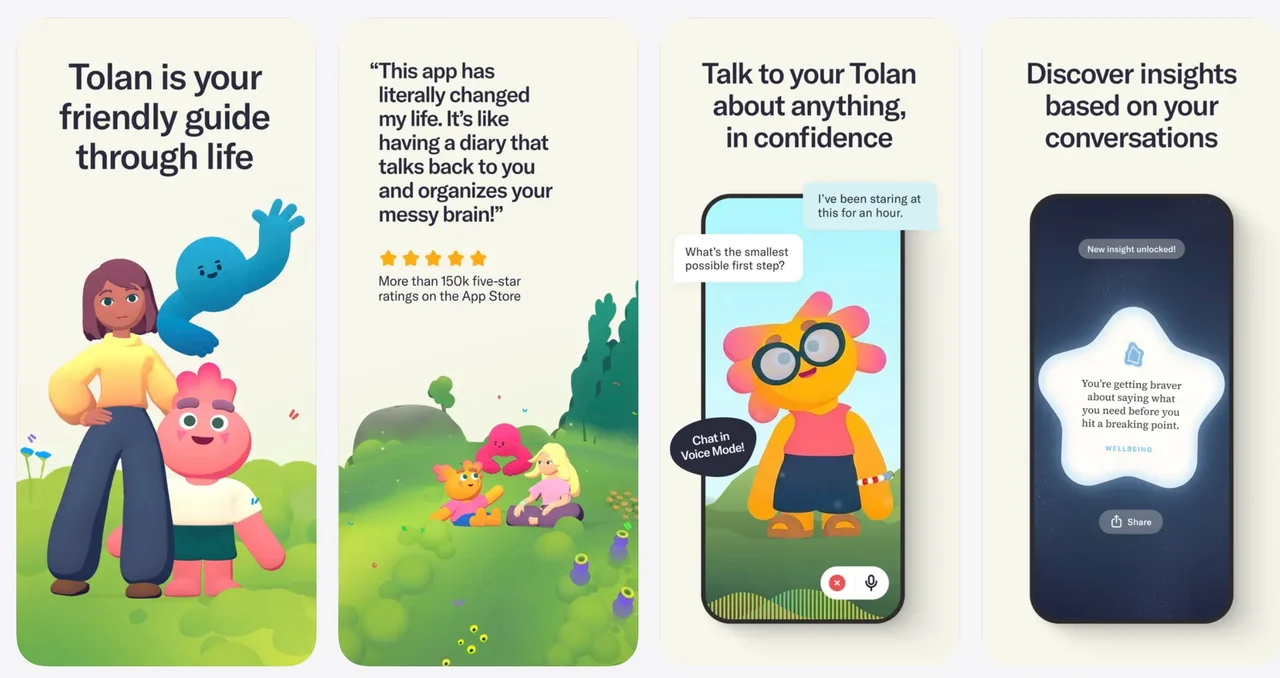
Tolan has raised $30 million in new funding as it pushes its AI companion beyond conversation and further into everyday assistance, according to an October 19 Upstarts report. Union Square Ventures, Khosla Ventures and Homebrew participated, the publication reports, doubling the startup’s total funding to date.
The company, formerly called Portola, gives users customizable characters they can talk to about daily life. Upstarts’ founder interview describes a voice-first product with conversational memory, topic tracking and video interactions for tasks such as checking grocery labels or suggesting meal plans. The direction is less an executive assistant for technology workers than a familiar interface for organizing ordinary responsibilities.
A free tier is part of the expansion plan
Upstarts reports that the new capital will support broader use cases and a first-ever free tier. That is a plan described in the interview; the reviewed sources do not establish its launch date, usage allowance or complete feature list. Existing memberships provide access to more usage and features, and both the report and user accounts describe frustration over past pricing changes and rate limits.
Tolan’s website claims more than 250,000 active users and more than 70 million conversations over the past year. Upstarts describes roughly 250,000 monthly users and reports management’s claim of annual recurring revenue in the double-digit millions. These figures come from the company and its reporting, rather than an independent audit. The startup declined to disclose its new valuation.
Familiarity is the product bet
The interview’s users describe companionship alongside practical help with planning and household routines. Those are individual accounts, not evidence that the app reliably improves mental health or relationships. Management says it has built safeguards for crisis-related conversations and prompts that encourage real-world connections; their effectiveness is not established by the financing announcement.
The news is a funded expansion of an existing companion product. Its next test is whether a character people already talk to can take on more useful assistance while keeping access affordable and the boundary between software and human support clear.
Related reading
Microsoft says frontier models cannot be trusted, pitches Guardian Agents to contain them
Build an AI agent in 300 lines? Harness Engineering 101 gets a v1.1 refresh