Put Vite+ in the first prompt: a developer's recipe for AI-built apps
Jan Michalek recommends one toolchain and explicit check, test and build results after using Vite+ across four projects. A fresh Hacker News thread brings the workflow back into view.
Jan Michalek’s recommendation for a new Vite app is simple: put Vite+ in the first prompt, then make the coding agent show its check, test and build results. After three weeks across four projects, the frontend engineer says a consistent workflow mattered more than merely making a linter faster.
His author-published English essay, dated October 10 in his blog index, reached Hacker News on October 20. That renewed discussion is the news hook. It is not evidence of a new Vite+ release or a measured adoption surge. The thread includes useful feedback as well as criticism of the writing; the submission is flagged, so it should not be read as a community endorsement.
One route from setup to verification
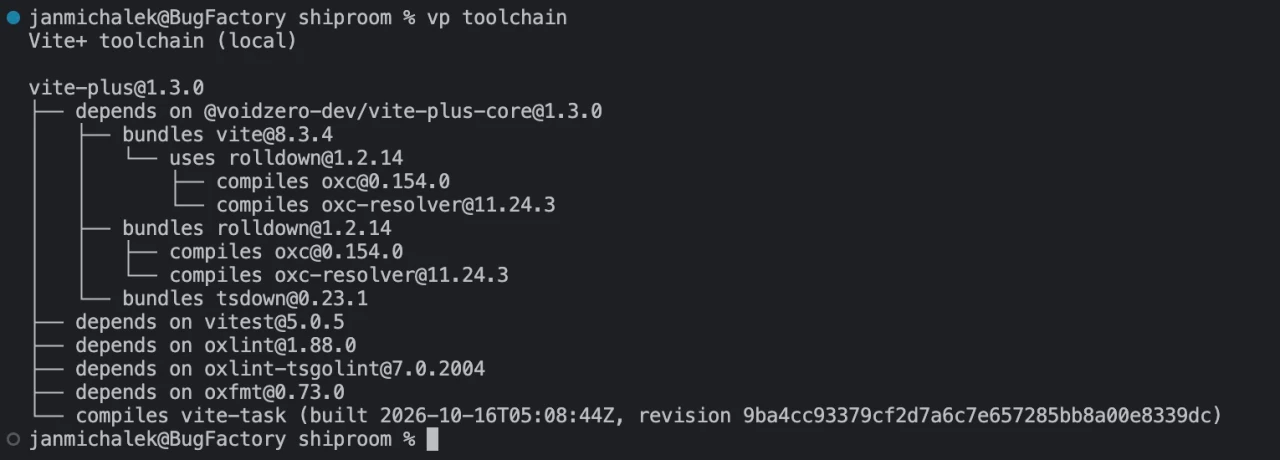
Vite+ gathers Vite development and builds, Vitest tests, Oxlint and Oxfmt checks, library tooling and task execution under vp. The project’s English README describes an MIT license and installers for Windows, Linux and macOS. It is a toolchain used by an agent, not an agent harness or a model provider.
Michalek’s React and TypeScript example starts with vp create vite -- --template react-ts, followed by installation and development. The completion steps are vp check, relevant vp test runs and vp build, with their actual results reported. He also asks the agent to keep one lockfile and avoid adding another formatter without a concrete reason.
A global installation is optional; his article also describes invoking the CLI through a package manager. Vite+ uses the project’s chosen package manager rather than replacing npm or pnpm. The recommendation does not introduce a model account or subscription; any coding assistant’s access and charges remain separate.
The settings behind a green check
vp check covers formatting and linting. In the workflow described, TypeScript checking requires both typeAware and typeCheck enabled. New project templates enable them by default, but existing configurations need inspection. A successful check still does not establish correct application behavior, which is why tests and a production build remain separate steps.
There is another important distinction: vp build runs a Vite application build, while vp run build executes the project’s script or named task. An agent working on Next.js cannot assume the former replaces next build. Migration also needs a review of custom rules, hooks and build output.
Michalek reports one monorepo’s CI falling from four minutes to 50 seconds and a pre-commit check dropping from 11 seconds to under two. These are his project measurements after workflow changes, not controlled comparisons or promised speedups. His stronger recommendation is operational: put the same commands in repository instructions and CI, inspect automatic fixes, and retain human review before merging.
Related reading

Voice Gate gives Hermes one more chance to cut the AI writing tells
OmO tells its architect to fix the code, and rolls back higher reasoning defaults