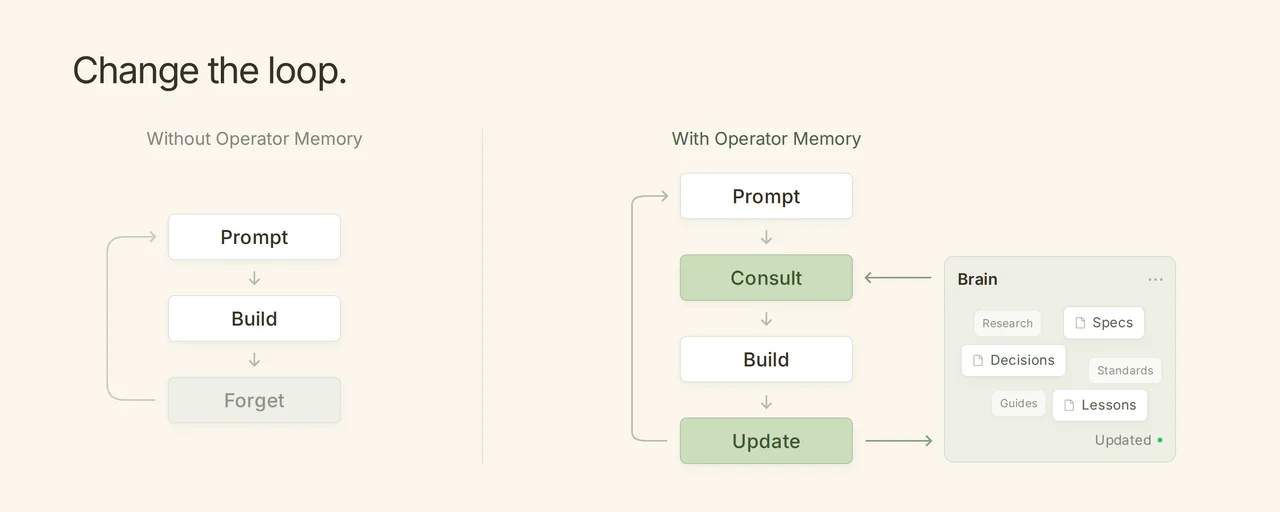
Agent Board 0.24.2 keeps lookalike agent sessions from stepping on each other
The local coding-agent dashboard separates sessions sharing a short ID and updates its message hub, with a rollback caveat for older versions.
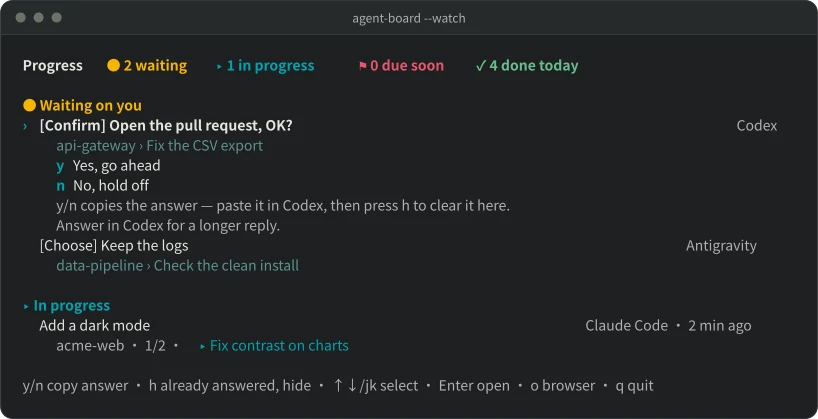
Two agent sessions with the same short ID should not share a question queue. Agent Board 0.24.2, released November 4 at 00:33 UTC, addresses that collision in its local dashboard for coding agents. The maintainer says independent sessions now stay separate, and archiving an ended session leaves the current one alone.
Agent Board collects progress from tools such as Claude Code, Codex and OpenCode into a local Markdown file, putting questions that need a human response at the top. It is an independently developed dashboard and integration layer, not a new model. The new release also adds a read-only agent-board --status line for a shell prompt or tmux.
Messaging changes come with an upgrade boundary
According to the release notes, the local message hub now uses a private store, removes old finished messages, expires uncertain deliveries and caps queued messages and relay hops. Users can dismiss a stuck message to let the next one proceed. The board’s --serve mode keeps messaging on by default, and two hubs cannot own the same message folder.
The practical upgrade warning matters: stop older boards first. Versions 0.24.1 and earlier cannot read the new store; the maintainer instructs users rolling back to move messages.json and server.lock out of the message folder.
The release also says Claude Code sessions in a terminal can receive board messages. That does not establish delivery across every desktop, IDE or chat surface. The tagged README distinguishes implemented receivers from live validation, and its illustrated board uses synthetic data. A queued answer is not proof that the agent received it or completed the work.
How users connect it
The npm setup route requires Node.js 22 or newer. npx @wenyuchiou/agent-board setup previews changes without writing them; setup --apply installs the applicable integrations. New agent sessions are required, Codex hooks need host trust, and Claude Code has its own plugin installation route. Users should inspect the preview because setup changes host integration files.
The MIT-licensed board reads progress without calling a model; underlying coding agents retain their own account requirements and costs. An optional Claude plugin can use Claude’s model to summarize turns. The browser page normally listens on localhost with a random key in its URL; optional LAN access uses unencrypted HTTP and offers no messaging. AITrending has reviewed the documentation and release notes, but has not independently reproduced these changes.
Related reading
Kiki 0.5.1 lets you rebuild an agent's context without starting over
OpenCockpit gives Pi-backed agents a team—and stops children that repeat themselves