Operator Memory gives coding agents two instruction versions—and a way to choose
The community memory plugin's Codex 0.3.0 release adds a stable 80/20 rollout of agent guidance, plus an explicit switch for the revised version.
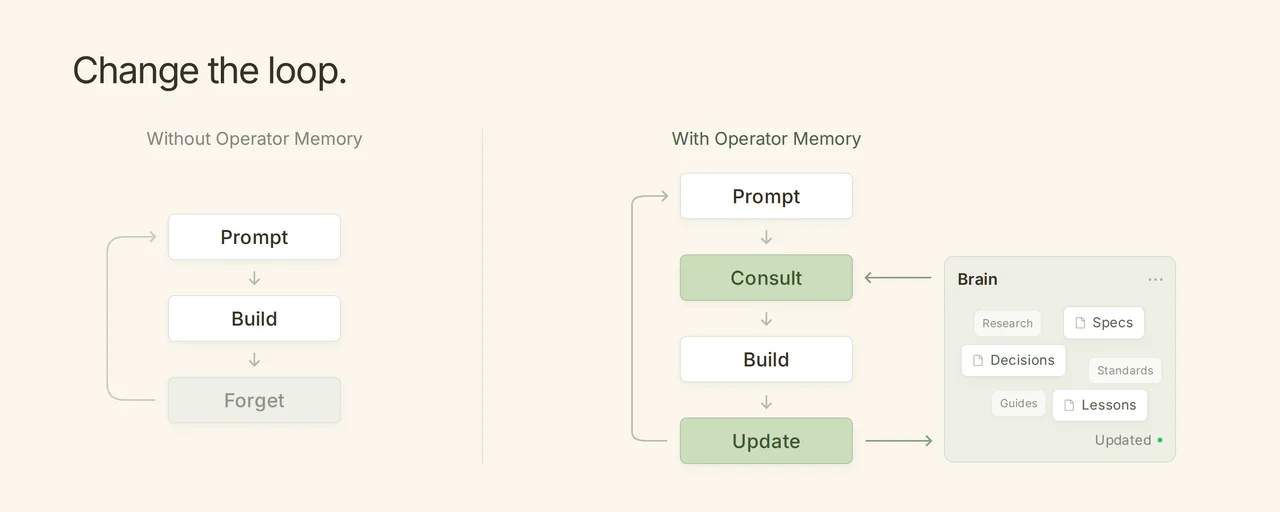
A coding agent’s memory behavior depends on its instructions—and Operator Memory now ships two versions of those instructions. The community project’s November 4 release, including its Codex adapter 0.3.0, introduces a stable rollout that preserves preamble v1.1 while assigning a smaller share of machines the revised v2.0.
According to the tagged architecture and merged implementation, the configured split is approximately 80% old guidance and 20% revised guidance. That is an assignment rule, not a measured adoption rate or evidence that either prompt performs better. A local OS machine identifier determines the selection consistently across projects, harnesses and updates; if the identifier is unavailable, the plugin uses v1.1.
Users who want the new version can set OPERATOR_PREAMBLE_BETA=1 in the harness or Helper process environment. It selects v2.0 for newly rendered preambles. Matching version attributes on guidance and tenets make the selection explicit. The documentation says the machine identifier is neither transmitted nor included in the preamble; that statement concerns the selector, not a promise that all agent context stays offline.
Markdown knowledge, with a visible entry point
Operator is a plugin around an existing coding harness, rather than a new model. It stores private project knowledge in .operator/, optional repository-shared knowledge in .operator-shared/ and personal knowledge in ~/.operator/user/. At session start, it loads a small orientation containing guidance, instructions, catalogs and the main project index. Deeper specifications, research and guides are read when needed, without requiring embeddings or a vector database.
For Codex, the documented route is Node.js 20 or newer, npm install --global @aerovato/operator-helper, then operator-helper install codex and a fresh session. Users must approve the plugin’s startup hooks before preamble injection works; Helper does not grant that trust itself. Initialization uses plugin skills such as $operator-user-init and $operator-project-init, rather than Codex slash commands.
The project uses BSD 3-Clause licensing; the existing harness still supplies model access and associated costs. Its promised consult–build–update loop depends on agents maintaining the files: the architecture explicitly acknowledges that the knowledge can become stale. AITrending reviewed the release, documentation and rollout patch, without independently testing memory quality.
Related reading
Kiki 0.5.1 lets you rebuild an agent's context without starting over
OpenCockpit gives Pi-backed agents a team—and stops children that repeat themselves