Bodhiorchard brings Ollama and HR into its self-hosted Jira alternative
Version 1.4 adds a People workspace, native Windows Hybrid support and an Ollama provider whose missing repository access sets a clear boundary on local agents.
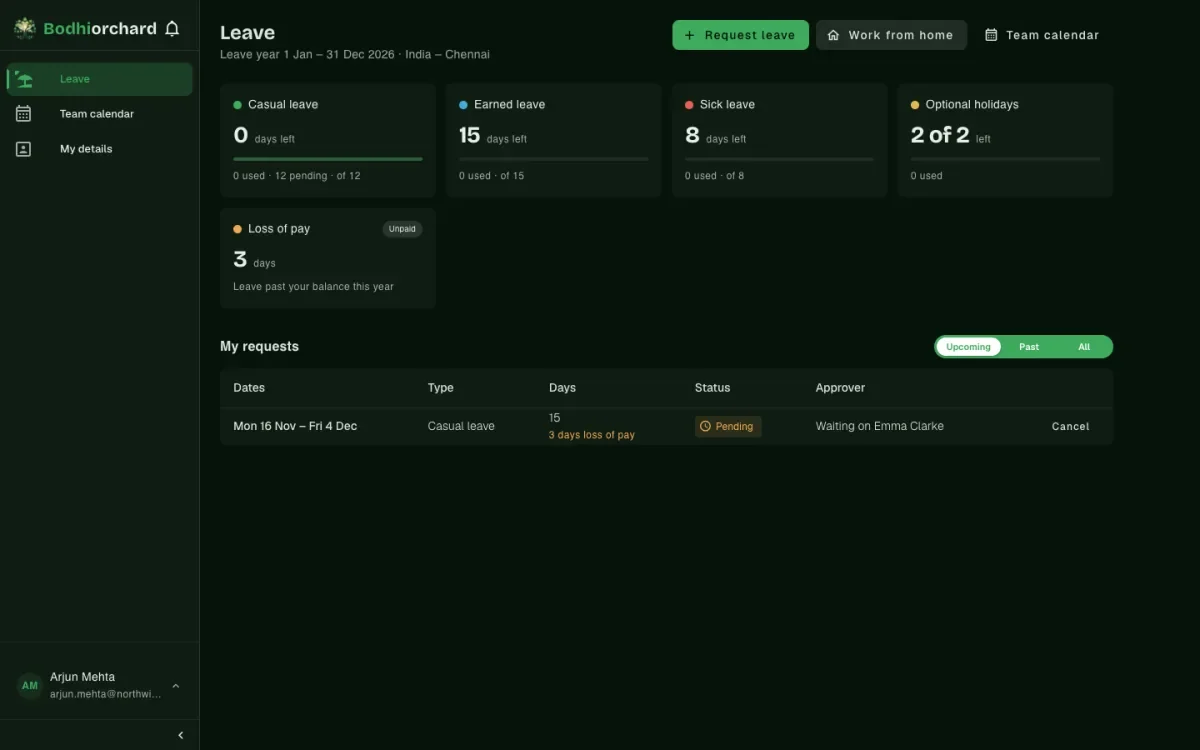
Bodhiorchard’s latest release wants the self-hosted Jira alternative to serve the whole company, while giving its agents an Ollama option. Version 1.4.0, published October 20, combines a People workspace for HR and Sales with native Windows Hybrid support and changes to installation secrets.
This is a standalone project management and orchestration platform above coding assistants. Its Business Understanding Documents link intake, specifications, estimates and test plans, with humans reviewing consequential phases. The README still lists the fully autonomous spec-to-code-to-test execution loop as future work.
Local inference has a concrete tradeoff
The new Ollama adapter talks directly to a local or hosted endpoint over HTTP, alongside existing Claude Code, Copilot and Codex CLI adapters. The engine guide requires Ollama’s native API and a model advertising tool support; an arbitrary OpenAI-compatible endpoint is not a substitute.
Ollama can handle text-oriented work such as triage, PRD drafting, questions and estimates. It has no repository file access in this integration. The platform therefore disables code-aware BUD specifications, design generation and repository scanning or feature synthesis through that provider. Installing Ollama does not unlock every workflow available to a CLI agent.
Choosing a hosted Ollama endpoint or cloud-backed CLI also means prompts can leave the machine. The project’s broad local-data language depends on the actual provider configuration.
People gets a separate boundary
According to the release, HR and Sales users get leave requests, work-from-home management, calendars and employee records, while engineering access is refused across API, MCP, WebSocket and multiplayer layers. Slack approvals use a first-manager-decision-wins rule. The authors describe AES-256-GCM encryption for sensitive employee records under a separate HR key, with logged reveals and downloads. These are implementation claims, not an independent security audit.
The quick installer needs running Docker and Node.js 18+: npx bodhiorchard init, then npx bodhiorchard start inside the created directory. Hybrid source installs use npm install, npm run setup and npm run dev, with Python 3.12 and Docker infrastructure. Existing CLI logins or applicable provider credentials and charges still matter; Apache-2.0 covers the software.
The tagged README and Windows backend guide document native Hybrid operation without WSL, although the general deployment prerequisites still recommend WSL2. Direct Windows backend launches should use python backend/dev_server.py, avoiding uvicorn’s reload mode.
Upgraders should also read the key migration: full Docker installs replace shared default secrets with per-install values and sign users out once. Back up HR_ENCRYPTION_KEYS with the data; production-mode installs must set it explicitly to recover encrypted records.
Related reading

Penmentor turns your coding-agent subscription into a handwritten math tutor
Respan launches a Rust AI gateway where even routing is a plugin