Penmentor turns your coding-agent subscription into a handwritten math tutor
The Linux project asks Claude Code, Codex or Antigravity to mark handwritten work, offer hints and animate an explanation, with important screenshot-sharing and demo limits.
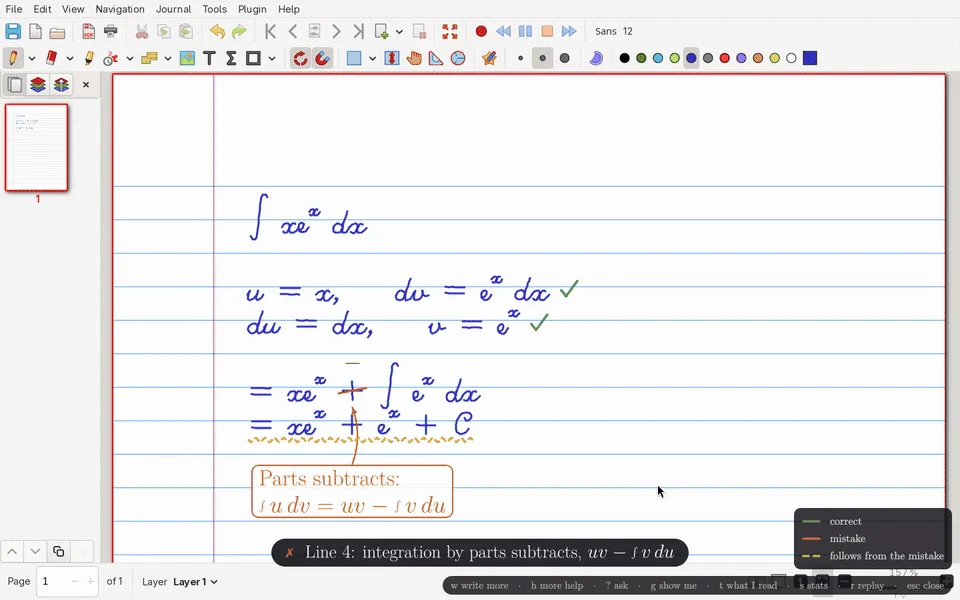
Penmentor wants the AI to circle the mistake on your handwritten page, rather than make you read another long chat response. Abdullah Alhariri’s Linux project uses an existing Claude Code, Codex or Antigravity login to turn a hotkey into colored feedback over mathematics written in xournal++.
The October 20 update keeps those marks over the live screen while the user continues writing. It also adds Codex and Antigravity alongside Claude Code, with the model setting selecting both the harness and model. This is a standalone desktop companion using those agents, rather than a plugin that installs inside all three.
Hints over your own working
The author describes a ladder from a small nudge to a named technique, a ghost of the next line and a full fix. Other modes check a final answer, ask questions about intermediate steps or create a find-the-error drill. An optional xournal++ plugin exports the whole current page, including work outside the visible viewport.
Boxing an expression can request an interactive explanation using manimgl, the OpenGL version of manim. The guide describes changing integration bounds, functions and other values inside the resulting visualization. These are documented capabilities, not an AITrending classroom trial or evidence of improved learning outcomes.
Linux setup, cloud screenshots
The supported setup is Linux X11, best with i3, with PyQt6 and tools including rofi, slop and xdotool. Users clone the MIT repository, run its self-test and bind the executable to a key. Animation needs a separate manimgl environment. In the HN discussion, Alhariri says the app is currently tailored to his Arch Linux and i3 setup; it is not a universal tablet or Windows app.
The model is supplied by an installed, authenticated CLI agent and its account limits. The guide says a screenshot of every monitor, plus the current notes page when the plugin is present, goes to the selected model. Local annotation does not mean local inference. It documents Claude Code without tools or MCP, Codex in a read-only sandbox, and Antigravity instructed to use its file viewer.
The author-published recording is explicitly scripted, with a fixed model answer. Its sign-error markup shows the intended interaction, not an independent live test of handwriting recognition or mathematical correctness.
Related reading
Respan launches a Rust AI gateway where even routing is a plugin