Kino puts your team and coding agents on the same video timeline
Its November 4 Launch HN presentation links footage, editable cuts and review notes, with desktop MCP access for Claude Code, Codex and other agents.
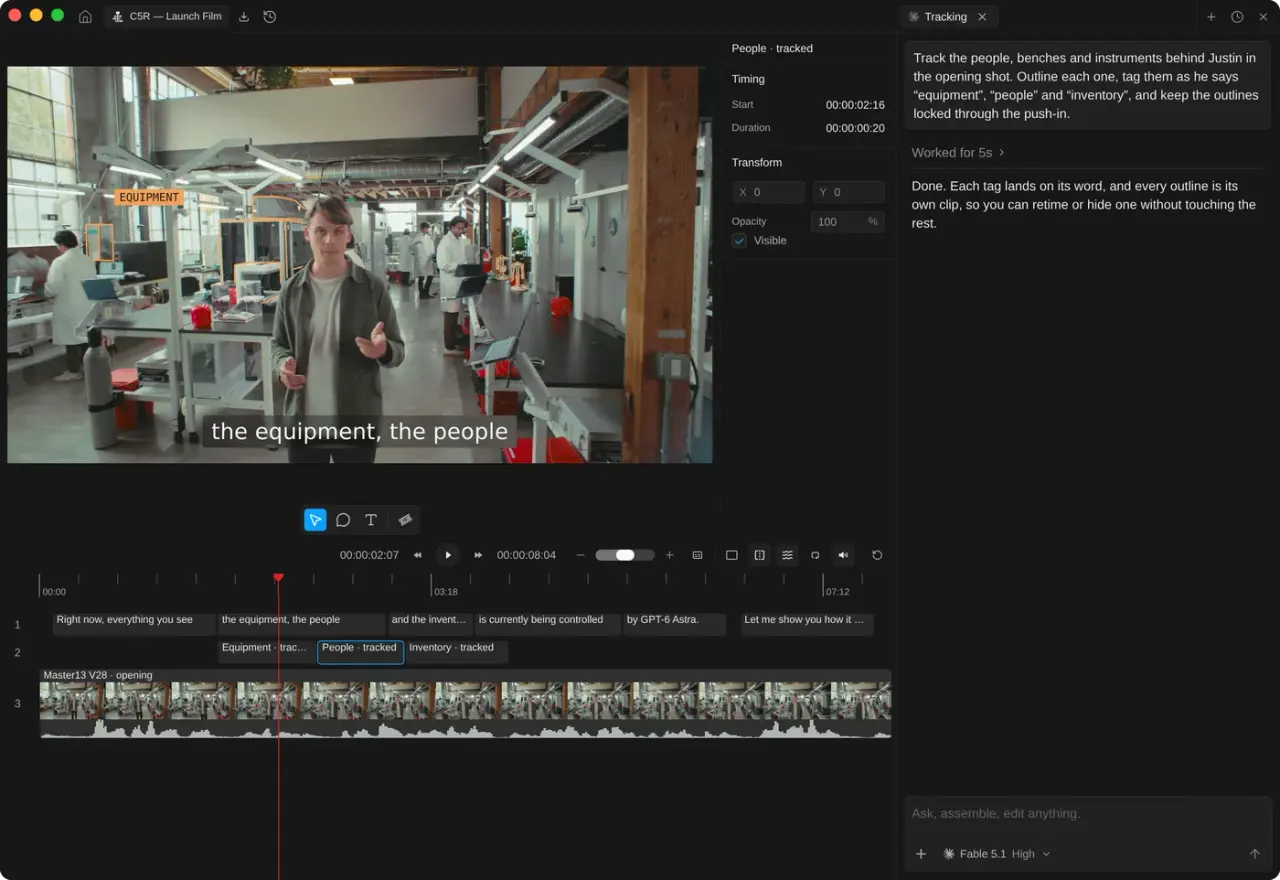
Kino wants to give coding agents the same video project your teammates are editing, rather than another detached render to comment on. In a November 4 Launch HN post, founder Luke presented a desktop workspace that combines footage storage, a visual editor and review notes on one shared timeline.
The hook is a feedback loop: a teammate can flag a particular shot, you can hand its URL to an agent, and the agent can change the editable project while you keep adjusting clips visually. Kino says timelines, graphics and comments are expressed as code on top of Remotion, so agent edits remain accessible in its visual interface.
Bring an agent, keep the editor open
This is a standalone editor, not a new video-generation model. Current documentation lists macOS Apple Silicon, Intel Macs on macOS 13 or later, Windows and Ubuntu; the download page identifies version 1.5.95 at review time.
Users install the desktop app, sign in and leave it running. Claude Code and Codex CLI can connect to its local HTTP MCP endpoint at 127.0.0.1:45680/mcp. The connection lets an agent search footage and edit projects. Installing that connection alone does not sign the app in, and provider subscriptions or usage charges remain separate from Kino’s plan.
The media workflow is not entirely local. Kino says it creates 720p proxies and uploads them to cloud storage so collaborators can stream footage when originals are unavailable. The founder describes local scrubbing alongside cloud inference, transcription and footage description.
Free editing has limits
The team guide lists one editor and 100 MCP calls per week on Free. Pro is $25 per editor per month, or $240 annually, and adds unlimited MCP calls and review links. Paid usage can still incur indexing, storage or model costs; unlimited tool calls do not mean unlimited free inference. The guide says anyone with a review link can watch and comment without an account.
The new event is the founder’s public launch presentation and discussion, not the invention of every listed feature. He dates Kino’s first launch to 2023 and its editor rebuild to 2025. The changelog already lists agent connections in July and in-app Claude Code/Codex support in August 2026.
Founder demonstrations and user comments suggest a useful way to direct agents through a real timeline, but AITrending has not tested multi-agent concurrency, codec coverage or export fidelity. Those remain product claims, not independently measured results.