LiteLLM 1.107.0 shipped a credential stealer: rollback alone is not the fix
LiteLLM confirms poisoned Python wheels and Docker tags on October 21. Its incident report urges affected users to rebuild environments and rotate secrets; the initial intrusion remains under investigation.
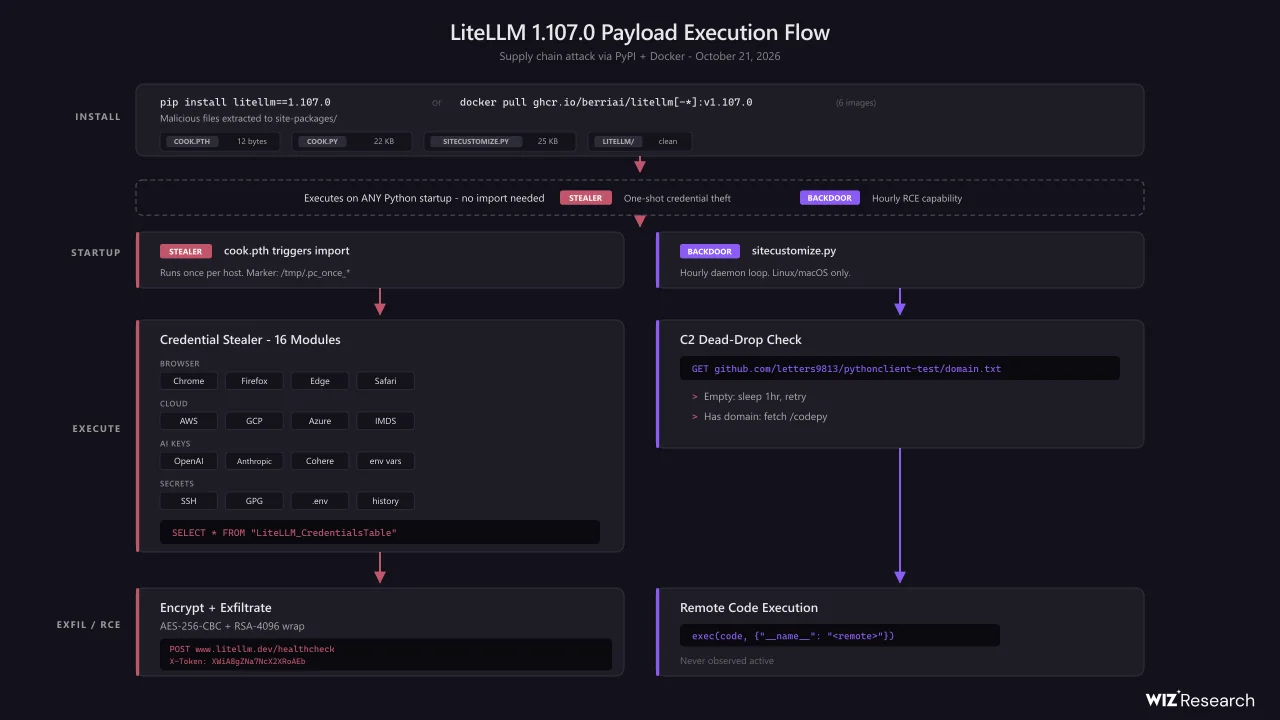
LiteLLM says attackers turned its public 1.107.0 release into a credential-stealing package, putting AI provider keys, cloud credentials and other reachable secrets at risk. The malicious wheels and container artifacts have been removed, but machines that ran them need an incident response, not just a version downgrade.
In its English incident report, last updated at 20:30 UTC on October 21, LiteLLM identifies all seven litellm==1.107.0 PyPI wheels and the container tags v1.107.0, latest, main-latest and main-stable. The company says customers pulling its private enterprise registry were not affected.
Which release window matters?
LiteLLM’s detailed timeline puts the malicious PyPI uploads at 11:39:51-11:40:13 UTC on October 21, with removal by 13:23 UTC. It dates compromised Docker Hub tags from 11:46:56 until 14:20 UTC, and says affected GHCR tags were unavailable by 13:51 UTC. These are the maintainer’s reported windows. Wiz’s earlier estimates put PyPI quarantine and container takedown somewhat earlier; those estimates should not narrow the maintainer’s exposure window.
The official GitHub source tag did not contain the malicious files, LiteLLM says. Its pipeline instead built the poisoned artifacts from a lookalike repository. Reading a clean source tag therefore does not establish that a downloaded wheel or image was clean.
Python startup was enough
Wiz’s analysis identifies cook.pth, cook.py and sitecustomize.py placed in the Python environment. Startup hooks could run without an application explicitly importing LiteLLM. The researchers describe theft of browser data, cloud credentials, SSH keys and AI-service API keys, including attempts to query provider credentials stored in a LiteLLM proxy database.
Wiz also describes a remote loader that checked a GitHub dead drop. Its analysis says the second-stage execution path was not observed active; that is separate from the credential theft. The researchers report observing subsequent abuse of stolen AWS credentials, including identity checks and model enumeration. AITrending has not independently reproduced the malware analysis.
The attack-chain explanation is still provisional
LiteLLM says stolen GitHub CLI OAuth credentials were used across multiple developer accounts to override branch protections and approve the release. The company believes tokens were obtained from logs in its internet-facing internal deployment. It reports situations where Claude Code put a GitHub CLI token into a response body that could then be logged.
That is LiteLLM’s current reconstruction, not a completed independent finding about Claude Code or the initial entry point. The company explicitly says it has not confirmed how the attacker first accessed its deployment and suspects a recently patched vulnerability.
Rebuild and rotate, rather than only downgrade
The maintainer advises treating environments that started Python with the affected package, or executed the compromised image, as compromised. Its guidance warns that starting Python again, including through pip, can rerun the hooks. Rebuilding images and virtual environments from scratch is preferable to relying on an uninstall, it says.
LiteLLM recommends pinning to 1.106.2 or an explicit earlier version and rotating secrets the affected host could reach: cloud roles, provider keys, proxy master and virtual keys, database credentials and environment secrets. Missing indicator files do not prove a system was clean. The incident is described as contained, while investigation of the intrusion continues.