Stop finding the same chat: Lore updates Claude Code and Codex history search
A source update groups repeated MCP search hits by session and reports when the recent month finishes scanning, while keeping memory proposals under human review.
Lore’s latest source changes tackle a familiar agent-memory annoyance: asking for earlier work and getting the same conversation several times on one search page. The local Claude Code and Codex archive now groups those MCP hits by session, keeping the best hit and reporting how many matches that session had on the page.
The November 4 patch is deliberately bounded. It leaves pagination and its cursor intact, so the same session can still appear on a later page with a lower-ranked hit. AITrending inspected the actual change; it has not run a performance benchmark or verified the complete application in use.
A second commit at 23:10 UTC adds a notification that the recent month’s scanning has finished while older history may still be processing. This makes recent-history completion distinguishable from finishing the whole archive. These are main-branch source updates to an existing project, rather than a newly distributed signed binary.
Search old sessions, review new memories
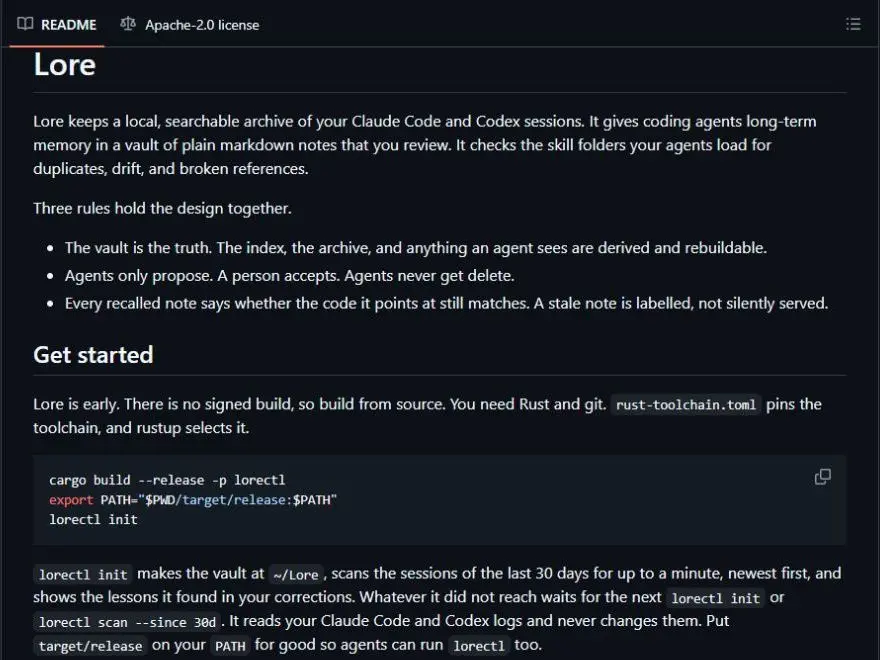
Lore combines a local SQLite session archive with a plain Markdown memory vault. Its documentation says it reads existing Claude Code and Codex logs without changing them. Agents can propose notes, but a person must accept them; recalled notes carry labels indicating whether their code anchors are fresh, moved, changed, gone or absent. A separate skills doctor checks duplicates, drift and broken references without editing the skill folders.
The documented installation route requires Rust and Git: build lorectl from source, put it on PATH, then run lorectl init. Claude Code users can add the hsusul/lore marketplace and install lore@lore. Codex integration is provided in plugins/codex, with a manual stdio MCP configuration also documented. The desktop development route lists macOS, Node.js 20, Xcode tools and Tauri 2 prerequisites; this is not an announced signed Windows desktop installer.
Lore uses Apache 2.0 and describes its own archive and memory components as offline, without accounts or telemetry. Connecting its MCP server to an agent changes the data path: returned text goes to that agent’s model provider. The original archive retains original text, and the README explicitly says redaction is a safeguard rather than a guarantee that every secret is removed. Provider credentials and charges remain those of the connected agent service.
Related reading
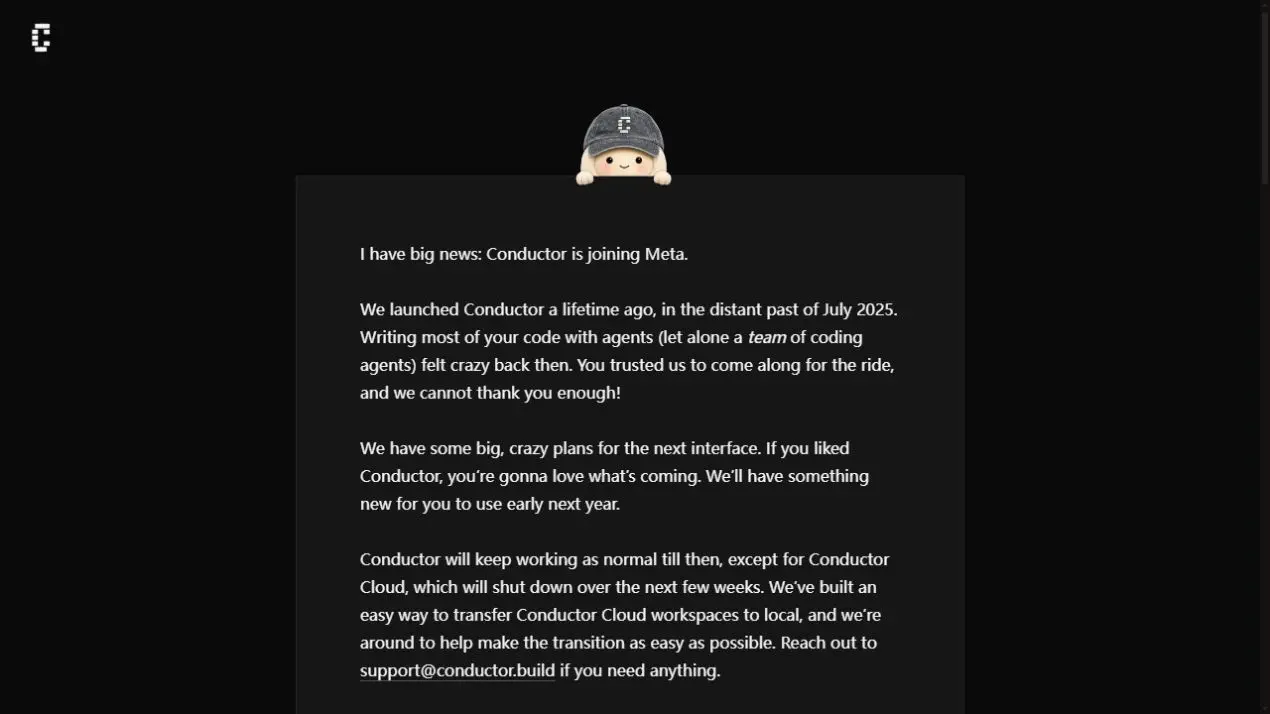
Meta buys Conductor. Cloud users have until November 20 to export.