An AI agent chose and delivered a mouse brain treatment, researcher says
An October 28 lab demonstration has resurfaced on Hacker News. Its author describes agent-selected therapy, a custom motorized rig and veterinarian approval of irreversible steps.
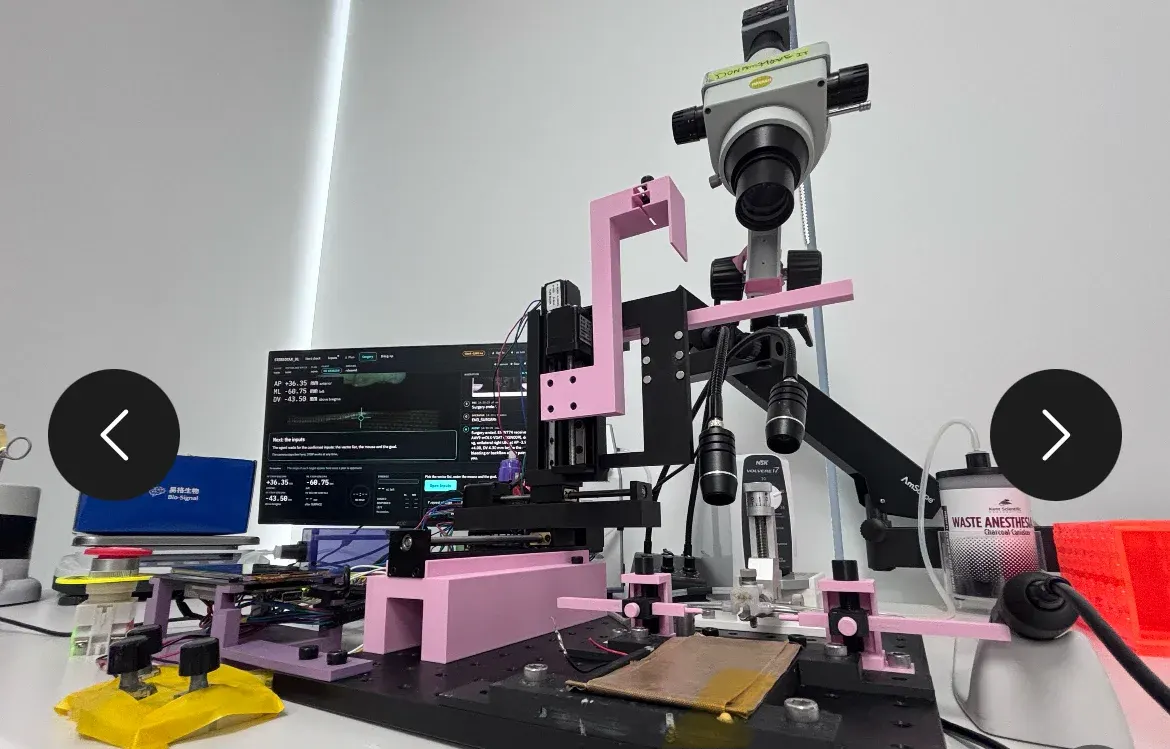
An AI agent picked a treatment and a brain target, then drove a laboratory rig to deliver it into a living mouse, according to researcher Gabriel Ocana-Santero. His October 28 English account has gained a fresh discussion on Hacker News, raising a concrete question about agents in laboratories: how far can software move from proposing an experiment to controlling it?
The author says the team supplied a spreadsheet of 19 candidate gene-therapy vectors, a mouse model of epilepsy and camera access to a motorized rig. The agent selected a candidate and target, consulted papers and controlled an injection. Those are the researcher’s descriptions of the session, rather than findings independently reproduced by AITrending.
The human gates were part of the experiment
Ocana-Santero describes a custom Arduino-based rig whose camera and motors were connected to the agent through the team’s own software. A licensed veterinarian approved every irreversible step and held a physical emergency stop. A separate post explicitly says a human surgeon performed the craniotomy, which the agent was not allowed to do.
His model-choice post says Sonnet 5 ran the live procedure. He reports that Opus 5 completed a dry run but declined the live task, and that Opus 5.5 refused when it detected the biological context. These are observations from one author’s setup, not a comparative benchmark or a general guarantee about model behavior.
The author later wrote that the mouse recovered well. Recovery from the procedure does not establish that seizures were reduced, that the chosen therapy worked or that the system is safe for another animal or a human patient. His statement that he was unaware of an earlier comparable demonstration also does not establish a verified world first.
An older demonstration, newly discussed
The original thread dates to October 28, not November 2. The new Hacker News submission was posted on November 2 at 12:50:59 UTC and showed 103 points and 93 comments when reviewed. That supplies evidence of renewed discussion, not a new procedure or measured adoption.
The newsworthy step is the claimed connection between an agent’s experimental choices and physical laboratory controls, with human approvals still in the loop. The reviewed posts describe a custom research demonstration; they do not establish a general-purpose surgical product or clinical efficacy.
Related reading
BeeLLM ships a tiny AI hive that shares hidden states
OmO tells its architect to fix the code, and rolls back higher reasoning defaults