Pi Pocket lets extensions launch sessions without a chat detour
Version 0.16.0 gives extension pages direct document actions and authorized linked-session routes; Recipes and update notifications remain separate extensions.
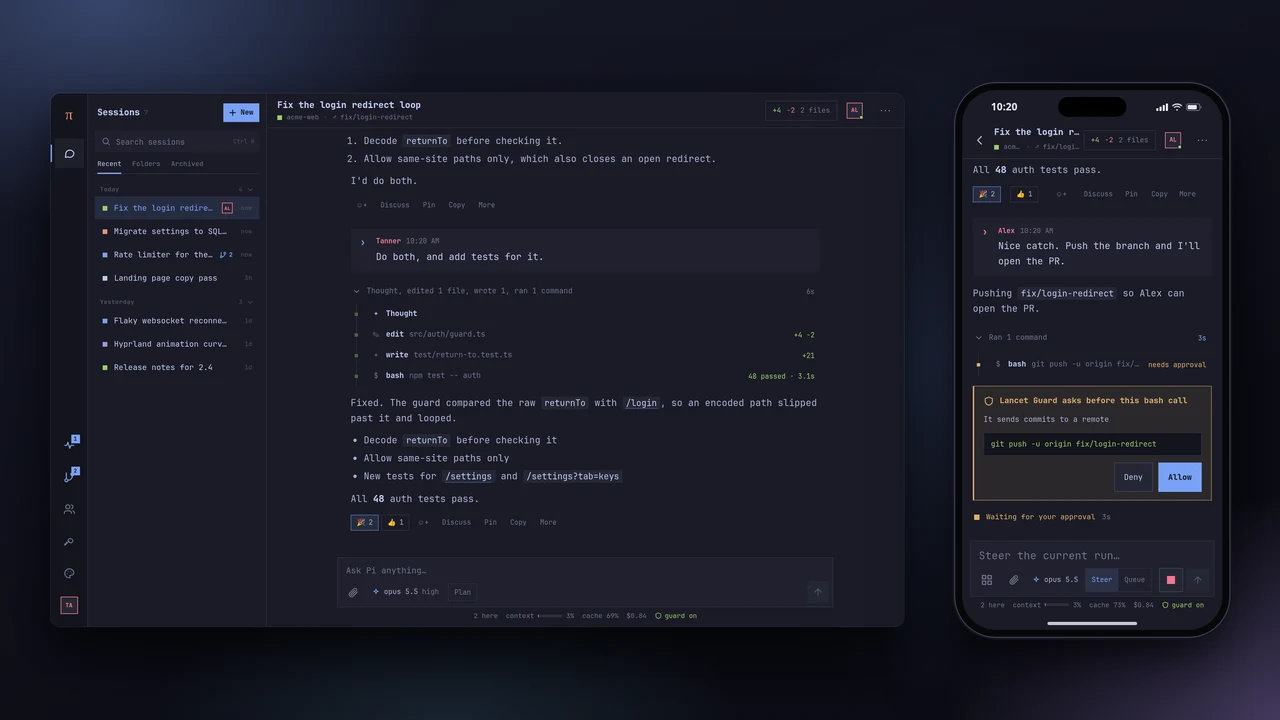
Pi Pocket 0.16.0 lets extension pages read and save their documents directly, and start linked coding-agent sessions as the person clicking the button. The October 18 release removes the need to route those document actions through a model message or retain a slash-command context. For extension authors, that opens a more direct path from a browser interface to an agent workflow.
A button can start a session, with existing checks
The new web.conversationRoute binds a server route to an authorized source conversation. It supplies a snapshot of that conversation’s settings and capabilities to start or list linked sessions. The documented checks still include access, steering rights, the current turn, plan mode, spending, team rules, model allowances and provider availability. A session identifier grants no additional access.
On the browser side, pocket.openConversation opens a session through normal app navigation. Host and browser version fields let extensions inspect the running Pocket package version. The extension API number remains 1; older servers require feature detection.
The maintainer presents Agent Recipes 0.2.0 and update-notification workflows as uses of these APIs. They are separate extensions: updating Pocket does not install or enable them. The release adds no core polling, automatic update, git-pull or restart API. Starting a linked session acknowledges admission of its initial message, not completion of the model’s work; cancellation does not undo already admitted work.
An independent host for your existing provider
Pi Pocket is an MIT-licensed, mobile-first web application built on experimental Pi Durable, independent of Earendil. Its README requires Node.js 22.19 or newer and lists Linux, macOS, Windows and Android Termux, with Linux the most tested. The documented source installation uses git clone, npm install and npm start. Provider access is configured through Pi login or the app’s Providers sheet; using Pocket does not supply free model inference.
Pocket has its own extension system, and Pi’s own extensions are not supported. Users who can steer agents can run commands with the server owner’s file and credential access; a session invitation or git worktree is not an operating-system sandbox.
The release describes automated checks using scripted models and temporary data, including desktop and phone-width layouts. It explicitly says physical phones and real providers were not tested for this release. AITrending has reviewed the English documentation, not reproduced those tests.