Sphinx makes you explain your AI's code before Git lets the push continue
The open-source Git hook turns a protected push into an open-book code quiz, using a separate reviewer model and your existing coding-agent workflow.
Your agent writes it. You answer for it.
Sphinx puts a quiz between agent-assisted code and a protected Git push. The community tool’s October 18 Show HN presents a simple proposition: let an AI help write the change, then ask the human to predict what happens when that change goes wrong.
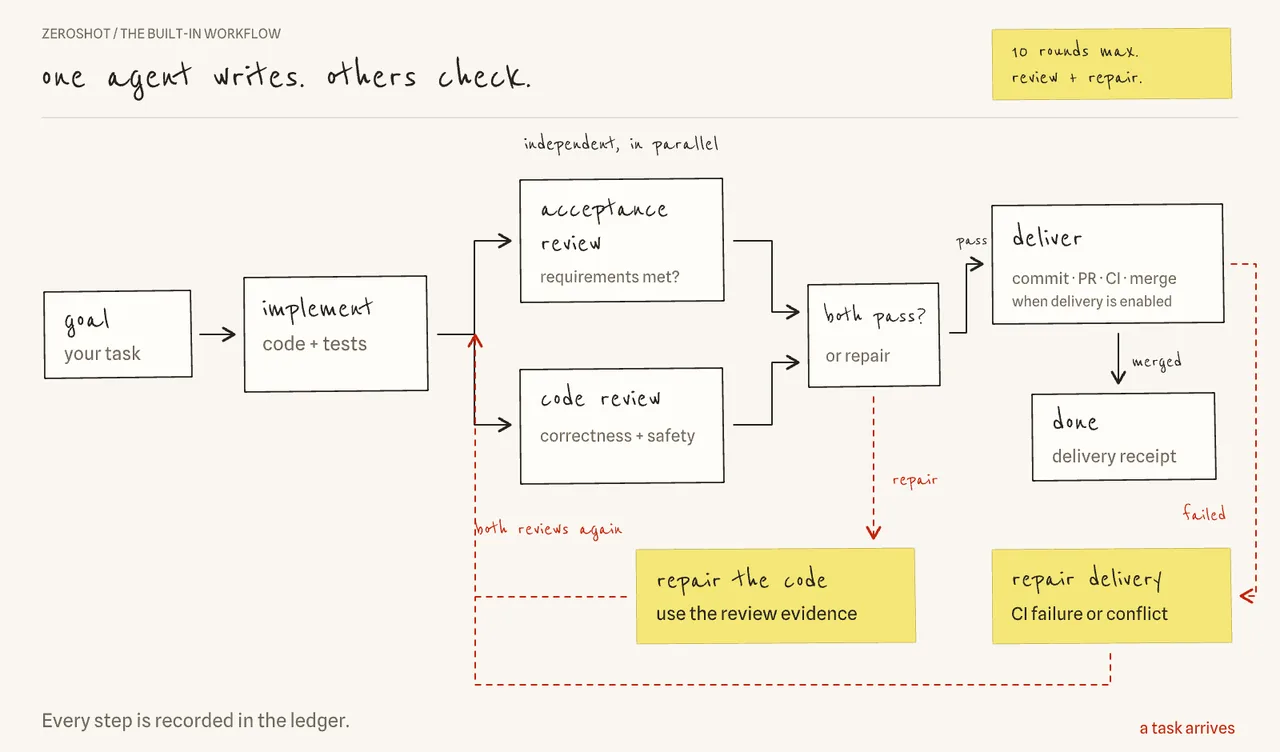
According to its English documentation, a separate reviewer model reads the committed change through read-only Git tools without seeing the conversation that produced it. It asks about behavior, failure modes and invariants. A wrong answer brings an explanation and a new scenario; passing lets the same waiting push continue. The exercise is open-book, so developers can inspect the code or ask their coding agent to show it.
The timing is a public introduction rather than proof of a first-ever release. The npm registry dates version 0.1.0 to October 16 at 22:14 UTC and version 0.1.4 to October 18 at 04:31 UTC. The Show HN submission followed at 04:33 UTC. Its discussion includes both support for a comprehension checkpoint and doubts about interruption fatigue and whether people will delegate the answers back to agents. Those are community reactions, not evidence that the tool improves comprehension.
A Git hook with machine-wide reach
The documented setup is npm install -g sphinx-understand, followed by sphinx install and repository configuration through sphinx init. It requires Node.js 22.19 or newer and Git on macOS, Linux or WSL; native Windows is not supported yet. The project lists integrations with Codex, Claude Code, Cursor, OpenCode and Pi, while the Git checkpoint also works without a coding agent.
Installation changes the user’s global core.hooksPath, chains existing hooks first and initially checks pushes to main or master across repositories. A matching push can wait up to 25 minutes. This scope matters: it is more than an optional question inside one chat window.
Sphinx has no hosted account of its own. Reviewer access can use a signed-in Codex or Claude Code CLI allowance, an OpenRouter API key or another OpenAI-compatible endpoint. API billing remains the user’s responsibility, and the documentation says there is no default cap on model calls. It provides an optional cap and recommends provider spending limits.
The reviewer receives changed code, related committed files, answers and project context. The authors say ignored files and common credential paths are excluded by default, but a secret pasted into ordinary source is not caught by path rules. Answers are kept out of the coding agent’s view, not out of the reviewer provider’s.
Practice, with an escape hatch
The project explicitly calls this practice rather than a security gate. A user or agent with local access can bypass a Git hook; the examiner can also be wrong. Pausing stops the push and preserves progress, while skipping or sphinx yolo permits a bypass and records it. Version 0.1 covers local commits and pushes, not web merges, deployment checks or a mandatory CI approval.
That makes the news hook specific: Sphinx turns human understanding into a visible step in an existing agent workflow. AITrending reviewed the announcement, documentation, package dates and public discussion, but has not installed the tool or independently measured its teaching effectiveness. The example conversations on its site are labeled illustrative, not observed user results.
Related reading
TokenSave says Codex used half the input tokens in a tiny Claude Code showdown