This infostealer asks AI what its victims are worth, Talos reports
Cisco Talos describes an optional model-driven triage stage that turns stolen credentials and personal evidence into ranked victim dossiers.
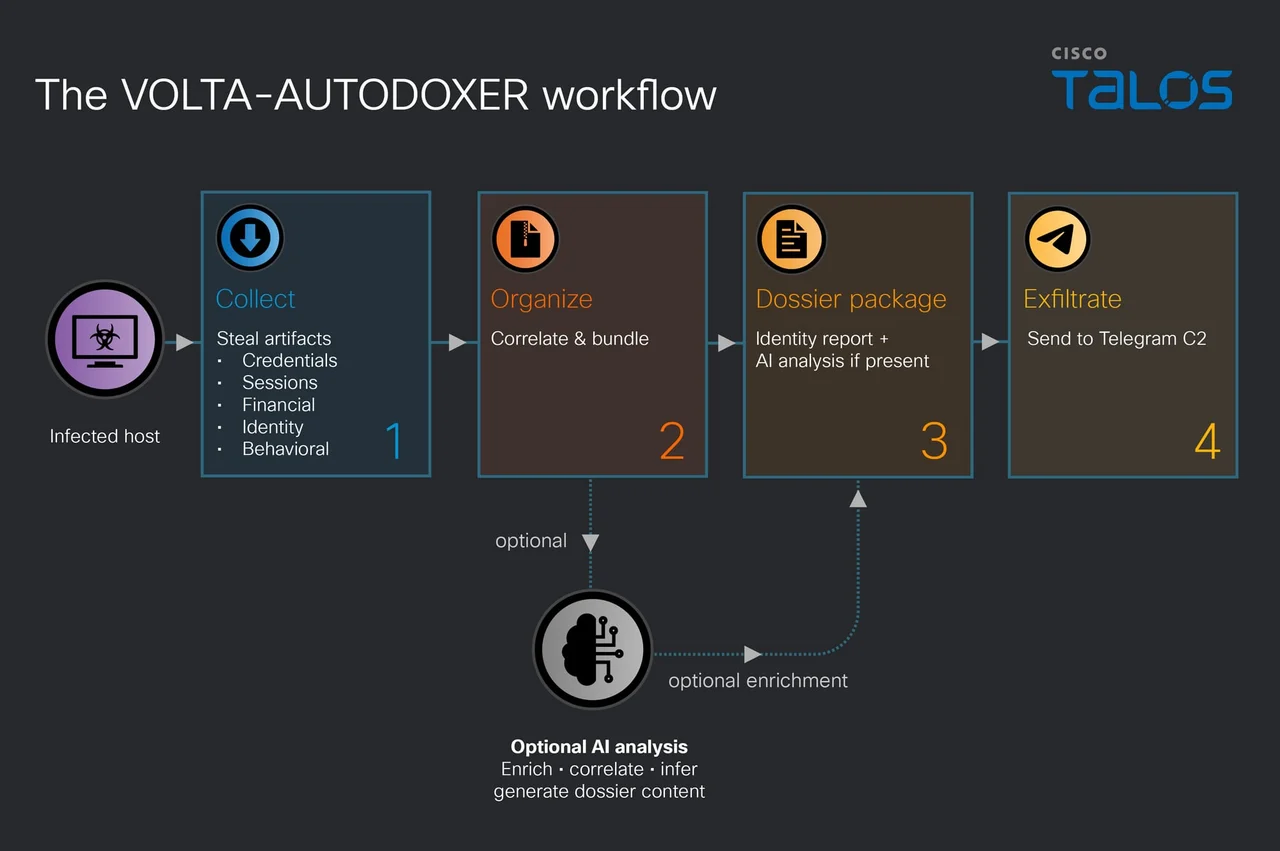
A Windows infostealer is using a model as a victim-appraisal assistant, according to Cisco Talos. In research published October 31, Ryan Fetterman describes VOLTA-AUTODOXER collecting stolen information, organizing it into a dossier and optionally asking an LLM which assets look most valuable to its operator.
The distinction matters: the model’s documented role is post-theft analysis. Talos is describing software that steals data and then delegates part of the sorting and inference work to AI, rather than showing a model autonomously breaking into a computer.
A dossier, then an assessment
Talos says VOLTA collects credentials, session material, cryptocurrency-related data and personal or workplace metadata. It can enrich that evidence using stolen authenticated sessions. The resulting identity report is assembled locally, sent through OpenRouter for analysis and packaged with the returned assessment for exfiltration.
The requested output includes sections titled “WHAT THEY’RE WORTH” and “THEIR OPSEC”. Those are phrases from the malware’s instructions documented by Talos, not a verified valuation of any victim. A model’s inference about wealth, identity or password habits can still be wrong.
Fallback logic is evidence of intent
The analyzed configuration selects Claude Opus 4.6 by default, with Kimi K2 and Gemini 2.5 Flash as fallbacks. Talos describes checks for refusal language before another model is tried. This shows engineering intended to handle refusals; the presence of those model identifiers does not establish that every provider accepted the request or that the chain defeated every safeguard.
The AI step is optional and the stealer can operate without it when no key is present. Talos also infers a possible builder-based distribution model from replaceable configuration slots, but presents that commercial interpretation as a hypothesis rather than confirmed sales or a customer count.
New research, an older sample
The sample’s first-seen timestamp in the report is October 11 at 12:46 UTC. October 31 is the publication date of the analysis, not proof the malware was first released that day. The report does not establish a campaign-wide success rate or a measured increase in criminal revenue.
For defenders, Talos recommends restricting or alerting on unexpected headless Chrome launches, using hardware-backed credential stores and preserving the malware’s harvest log if a compromise is found. Potentially exposed tokens should be revoked and passwords changed. The broader signal is a shift in where AI is inserted: after collection, to reduce the human effort needed to decide what to pursue next.
Related reading
OmO tells its architect to fix the code, and rolls back higher reasoning defaults