Auto Browser patches desktop-access and approval-replay gaps
Version 1.11.2 addresses four maintainer-disclosed security issues in the agent browser stack; updating its Python client alone does not apply the fixes.
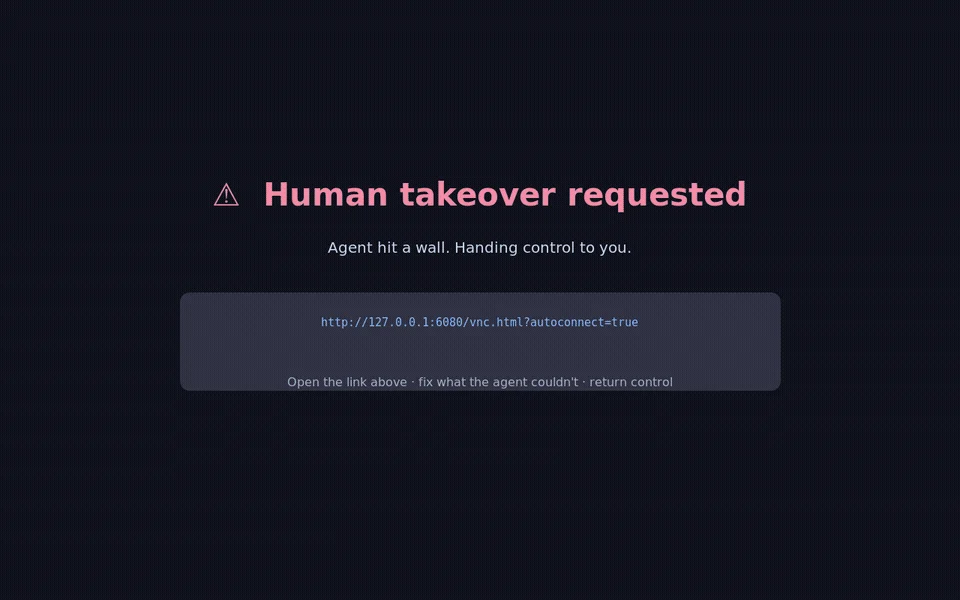
A browser agent’s approval can become dangerous if a failed response makes the same action run twice. Auto Browser’s 1.11.2 security release changes when approvals are spent and closes a separate desktop-access path, alongside fixes to website restrictions and signed action receipts.
The self-hosted project connects MCP clients and LLM agents to a Playwright browser, with saved login profiles and human takeover. Its maintainers published the release on October 29, followed by four advisories: one rated high severity and three rated moderate in the release notes. They report no exploitation in the two advisories examined here; AITrending has not independently reproduced their findings.
A desktop route around the browser’s gate
According to the VNC advisory, affected browser-node images exposed the same desktop through raw VNC on port 5900 as well as noVNC on 6080. The VNC library accepted WebSocket connections without checking the Origin’s value, potentially letting a webpage that could reach the port view and control the desktop, including a signed-in browser.
The maintainers established that path from source and the shipped library, rather than reproducing it in a browser. Browser local-network prompts and a configured VNC password affect whether access succeeds. Version 1.11.2 removes the TCP listener and routes noVNC through a Unix socket. Processes able to reach 6080 remain a separate trust concern; noVNC still has no password by default.
One approval must not become two actions
The governed-approval advisory describes approvals that could be presented misleadingly, reused after an action started, or bypassed through scheduling tools. Previously, a click or upload could happen before a later error returned its approval for reuse. That creates a repeat-action risk even without an attacker.
The new controller records an approval’s origin and spends it before execution. An error after execution begins no longer restores it. Operators should inspect the actual outcome before approving a retry. Multiple controller processes sharing one approval store remain unsupported.
Upgrade the running stack
The release also addresses off-list page content reaching agents through secondary channels, and receipt failures that could report errors after actions had already run. These are the maintainers’ findings, not evidence that every browser action is now safe.
Applying the update requires the controller, browser-node image and current Compose file, then recreating containers and closing older isolated sessions. Explicit ISOLATED_BROWSER_IMAGE settings must select the new image. Updating only the client, LangChain or MCP bridge packages does not deploy the fixes. Existing cron jobs retain their old fast profile unless recreated as governed or covered by the force-governed setting.
Related reading
Mnemosyne's new preview makes stale-memory holds reviewable
CVE Intel adds MLX: local vulnerability Q&A gets an Apple-silicon route