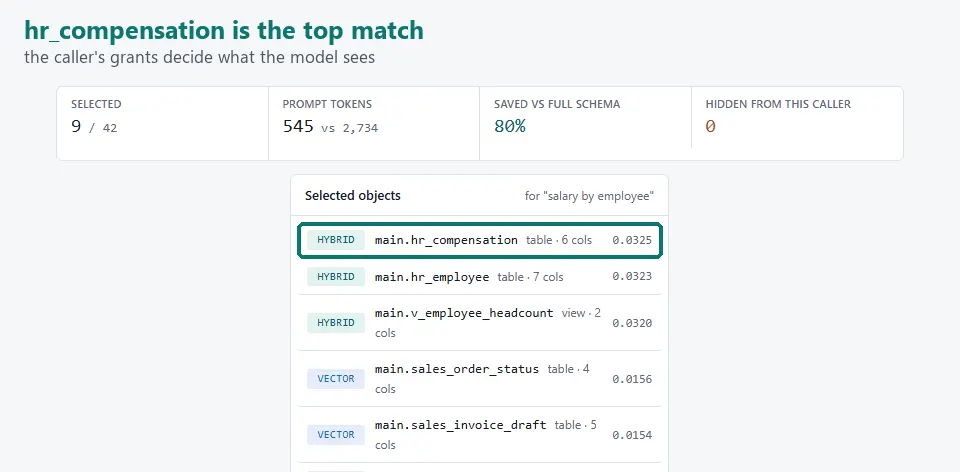
Mnemosyne's new preview makes stale-memory holds reviewable
The local agent-memory project's latest release candidate adds CLI decisions for held dependencies, hybrid retrieval debugging and encrypted backups; stable installs stay on 2.0.0.
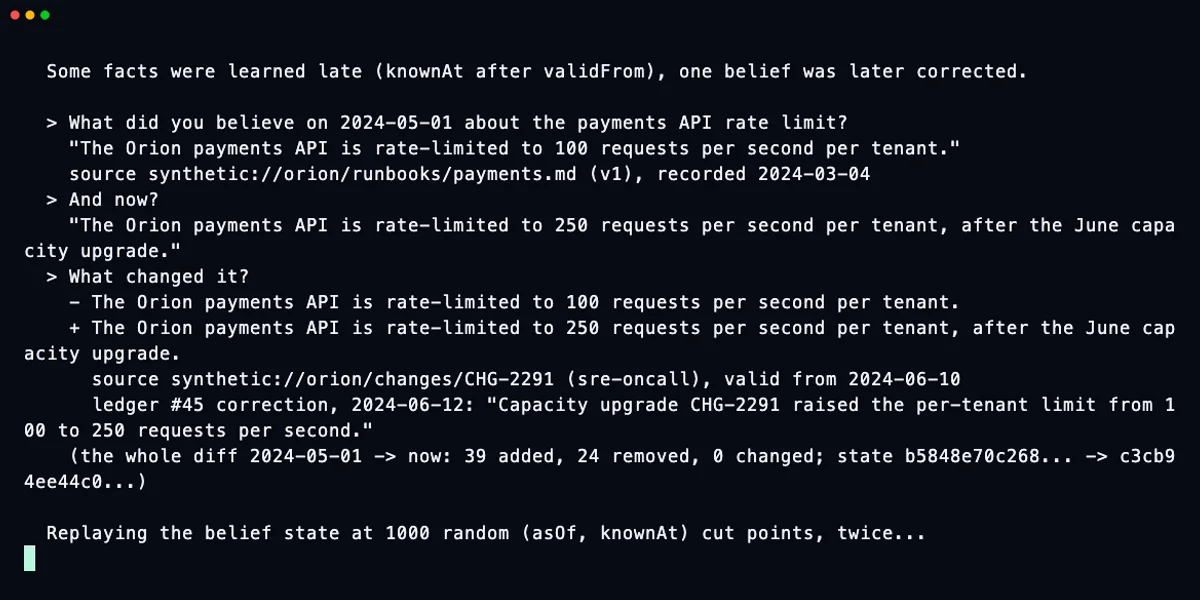
An AI agent can remember a procedure long after the fact behind it has changed. Mnemosyne’s latest preview gives developers a more concrete way to inspect and resolve that problem: list the memories held because a premise changed, then accept or reject the suspected dependency with a recorded decision.
Version 3.0.0-rc.4 reached npm and GitHub on October 29. The TypeScript project stores agent memories and their evidence in a local SQLite file. Its stable npm channel remains 2.0.0; installing mnemosy-ai@next or pinning mnemosy-ai@3.0.0-rc.4 selects the preview.
See why a remembered procedure was paused
The project’s premise guard can hold a procedure or skill that was used successfully alongside a fact which later changed. Such co-use suggests a relationship, but does not prove one. Earlier dependency inference already proposed links for review; rc.4 makes the guard’s holds directly inspectable through mnemosy dependencies --holds.
Each entry includes the changed premise, its correction, supporting task references and a digest. A reviewer uses --review DIGEST --accept or --reject; rejecting a hold requires a reason. Acceptance links the dependent to the premise’s current version, so a later correction can propagate through the recorded dependency. A receipt records either decision and releases the hold.
That is a controller-integrated workflow, not an automatic guarantee that every stale instruction disappears. Executors must apply the guard, and the author’s synthetic dependency tests show that its conservative default can hold many pairs that are not truly dependent. Review workload is part of the tradeoff. AITrending has not reproduced those tests.
Recovery and installation are part of the update
The release also adds encrypted whole-database backups that can include the separate consolidation signing key. Local databases themselves remain plaintext. Retrieval debugging now offers --retrieval auto|lexical|hybrid for bisecting which records displaced known expected results; that does not diagnose every wrong generated answer.
The MIT-licensed local engine requires Node.js 22.16 or later and no model API key, database server or Docker. Optional semantic-search models need separate provisioning. The release adds a Claude Code marketplace plugin, with author-reported testing on Claude Code 2.1.301. Cursor and Hermes configurations are documented with testing limits; the Hermes runtime integration is explicitly untested.
For a pinned offline demonstration after the initial package download, the README gives npx -y -p mnemosy-ai@3.0.0-rc.4 mnemosy demo. Connecting an agent exposes local memory tools: the documented MCP server supports --read-only, while forgetting needs an explicit destructive-capability flag. The host still controls identities, permissions and the evidence recorded as successful outcomes.
Related reading
Auto Browser patches desktop-access and approval-replay gaps
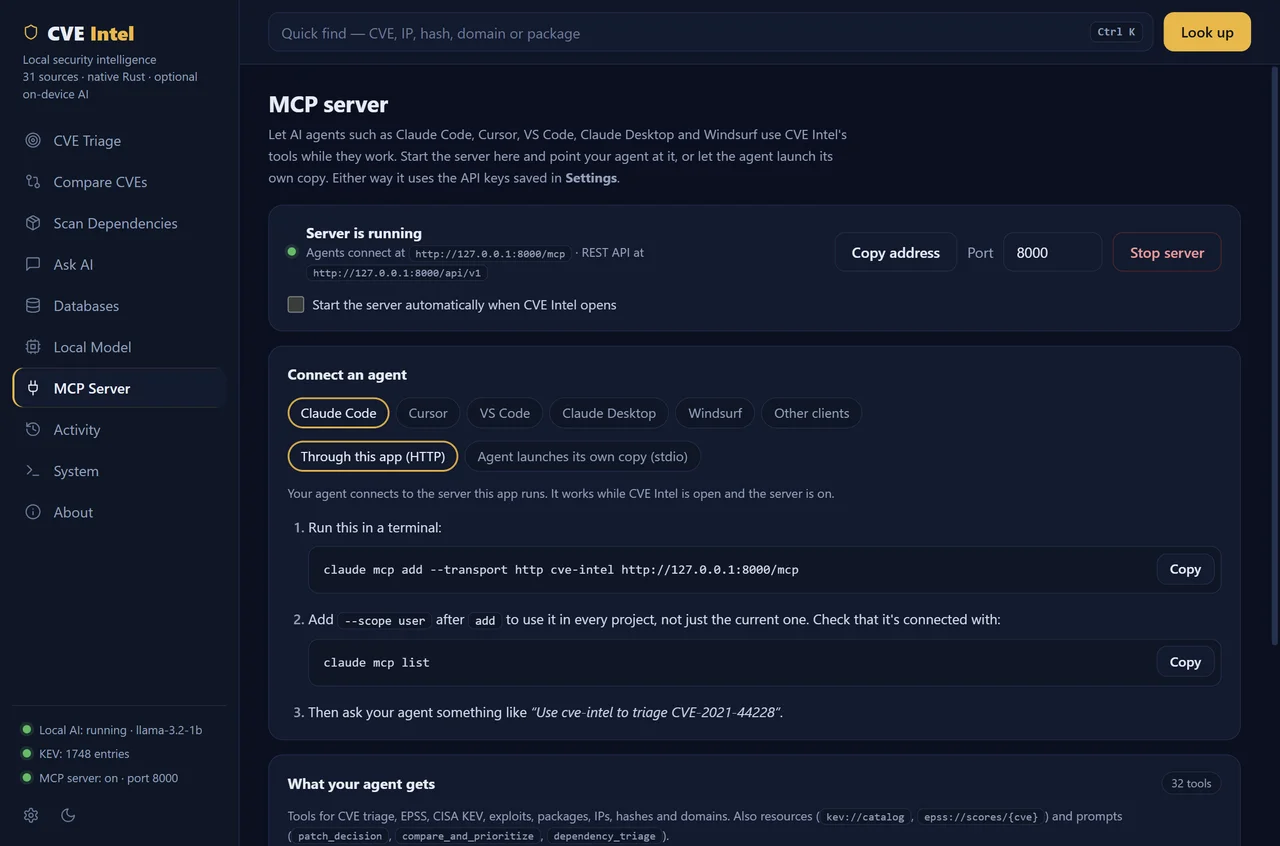
CVE Intel adds MLX: local vulnerability Q&A gets an Apple-silicon route