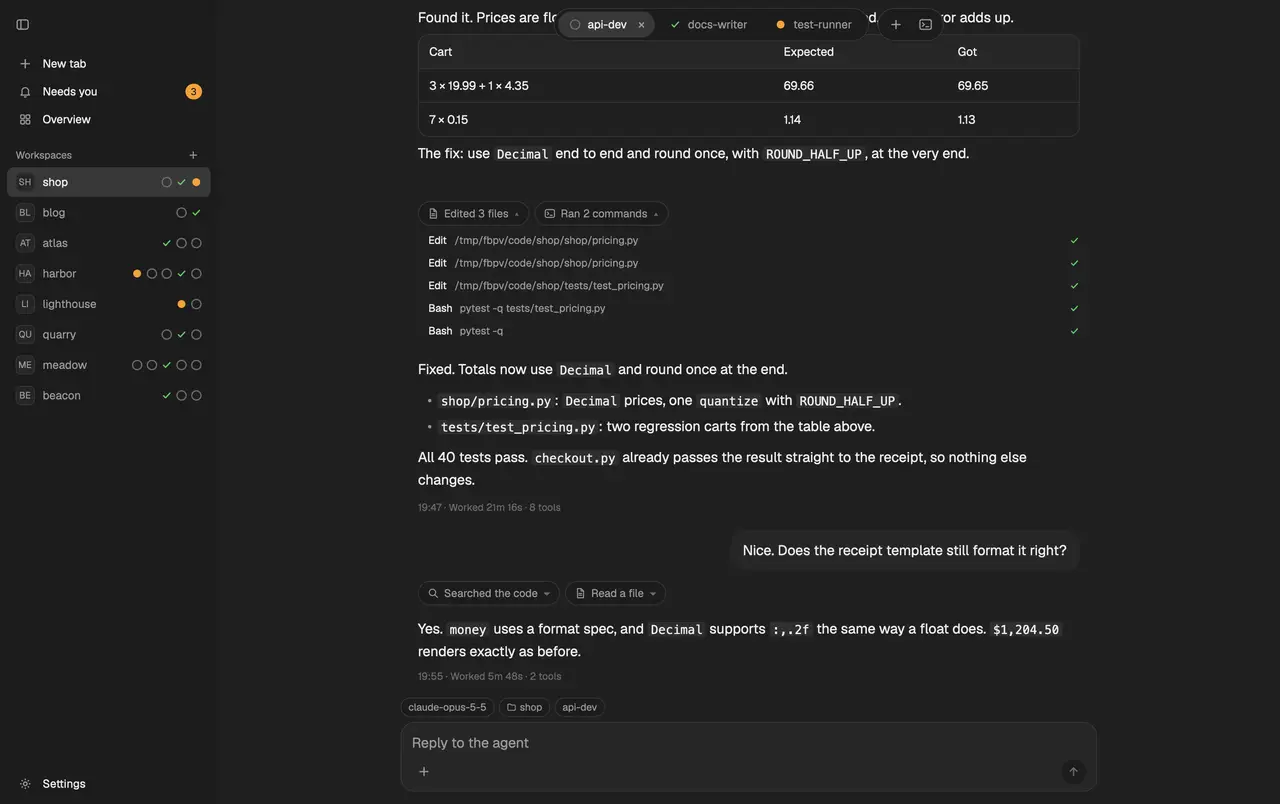
Stop teaching each coding agent from scratch: Beacon shares reviewed memory
Beacon's authors are pitching a shared memory layer for Claude Code, Codex, Cursor and other harnesses, turning session traces into lessons a person approves.
Switch from Claude Code to Codex or Cursor without starting the repository’s lessons from zero. That is the pitch behind Beacon, an MIT-licensed memory layer whose authors brought its cross-harness workflow to Hacker News on October 21. The project says it captures sessions across more than 20 harnesses and makes reviewed knowledge available through MCP or Agent Skills.
The useful distinction is between recording everything and teaching an agent something worth keeping. Beacon normalizes prompts, tool activity and other available session events into traces. Its memory workflow then selects sessions, evaluates whether they contain useful lessons, drafts a lesson from the source evidence and asks a person to approve it. Approved memory can be recalled before a later task or promoted into a project skill.
The evaluator does not write the lesson
The English skills documentation says the evaluator returns probabilities, such as whether a task succeeded or a trace contains reusable knowledge. The coding agent reads the underlying trace and writes the actual lesson. That separates a scoring signal from the text future agents will follow. The documentation also treats stored lessons as subordinate to current user instructions and repository guidance.
For example, a debugging session might establish the right build order or uncover a migration step an agent repeatedly misses. A developer can review that lesson once and make it available to another supported harness. This is a documented workflow, not an independently measured claim that every captured session improves future performance.
Local capture and cloud setup are different choices
Beacon is a separate capture service and CLI alongside the coding harness, with plugin and skills integration; it does not provide the model behind Claude Code or Codex. The guide offers macOS Homebrew, Linux packages and a Windows x64 MSI. Endpoint capture must be installed for local traces to exist. beacon skills install adds the memory skills; harness-specific marketplace routes are also documented.
Local recall and promotion need no evaluator key. Distillation requires an evaluator credential or a compatible organization endpoint, and the documented flow shows a dry run and estimated cost before an approved evaluation call. That call can send a bounded, redacted trace projection off the machine.
Interactive endpoint setup preselects Beacon Cloud and offers an explicit Local opt-out. Signing in alone does not forward data, but confirming the hosted choice connects the endpoint and starts forwarding. The local beacon MCP server and hosted beacon-managed server are separate; hosted MCP uses its own access and plan requirements. Users should choose the destination deliberately rather than equating the local-first label with every setup staying offline.
The latest inspected release, v1.3.45, was published October 20 and includes a reasoning-token accounting fix. Today’s author discussion is the reason to revisit the broader memory workflow, not evidence that those capabilities first shipped today. AITrending inspected the sources but did not install Beacon or test cross-harness recall.
Related reading
Rexpad puts a coding agent’s live plan beside its terminal
Anfra lets AI-built dashboards show the rows behind a chart