Let templates do the boring code: BESSER's hybrid app builder gets a fresh look
A new Hacker News discussion highlights a model-first alternative to generating every line with an LLM, with a browser editor and optional keyless inference.
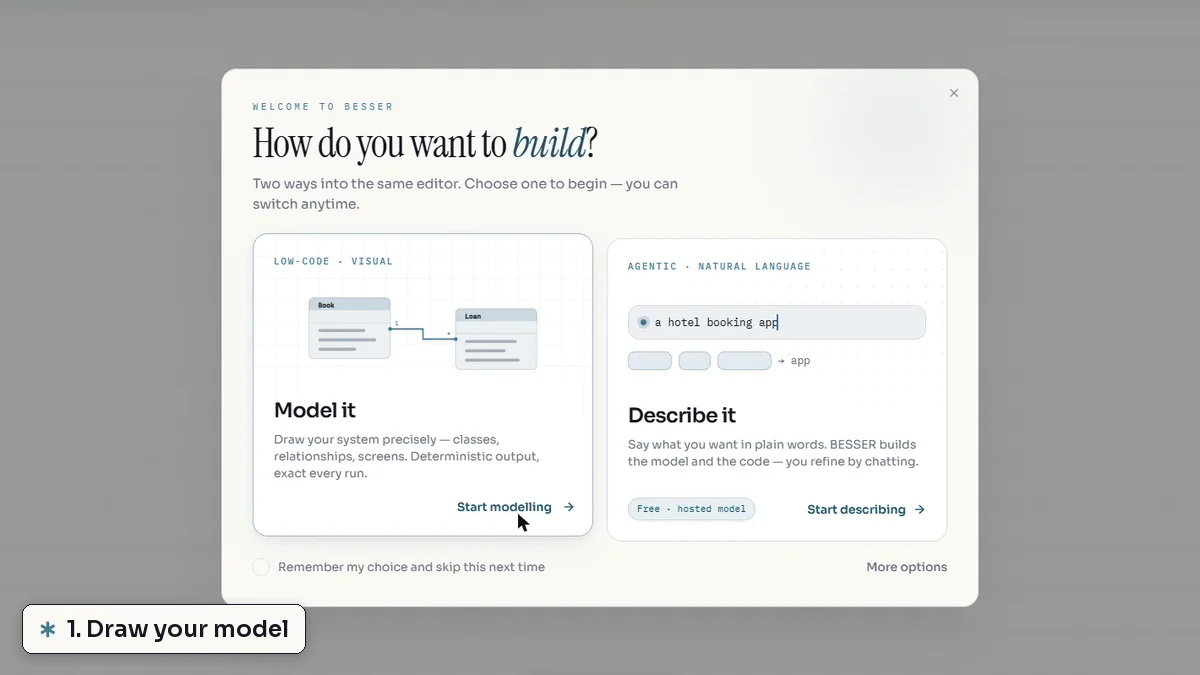
BESSER’s pitch to app builders is to stop asking an LLM to reinvent code a generator already knows how to write. An October 21 Hacker News discussion points to the open-source platform’s browser editor and its hybrid approach: model the application, generate a scaffold, then use an agent for the requirements the templates do not cover.
The distinction is concrete. BESSER’s Python generators can turn a structural model into a FastAPI backend, database schema or full-stack application. Its experimental Spec-Driven Agent starts with that scaffold where a generator fits, asks an LLM to customize it, then validates and attempts repairs. Authentication, middleware and tests are examples in the documentation. For a stack without a built-in generator, the agent instead writes from stack metadata and the model’s contract; the template-first promise does not mean every target has a deterministic scaffold.
Try the workflow, without confusing the costs
The no-install route is the BESSER Web Modeling Editor. Python users can install the library with pip install besser; the README lists Python 3.11 and 3.12. It also offers agent skills through npx skills add BESSER-PEARL/besser-skills --all for coding assistants such as Claude Code, Cursor, Copilot and Cline. BESSER is the modeling and generation platform; those assistants are separate hosts, and model providers supply inference.
Plain template generation is free and offline. Agent runs need an LLM. A deployment can configure a keyless free tier, including limits and fallback models, while optional commercial providers use the user’s API key and incur their charges. The project’s free-builder framing should not be read as unlimited free inference on every self-hosted installation.
Generated-code execution also has permissions to consider. The documented hosted setup isolates generation in a separate worker with compilers, LLM credentials and sandboxed shell commands. That architecture is a deployment requirement, not something the MIT license supplies automatically.
The model does not preserve every edit
BESSER explicitly calls this agent experimental. Validation covers defined checks such as syntax, imports, contracts and lint, with supported sandboxed build or runtime probes when authorized. It does not prove every business requirement. Modify mode carries earlier files forward, but a fresh regeneration cannot reconstruct arbitrary external edits or prior repairs from the model alone.
The current discussion makes this a useful workflow to inspect for builders who want more predictable scaffolding. It is not a new-platform launch or an independently demonstrated productivity gain. AITrending read the English project and deployment sources but did not generate or deploy an application with it.
Related reading
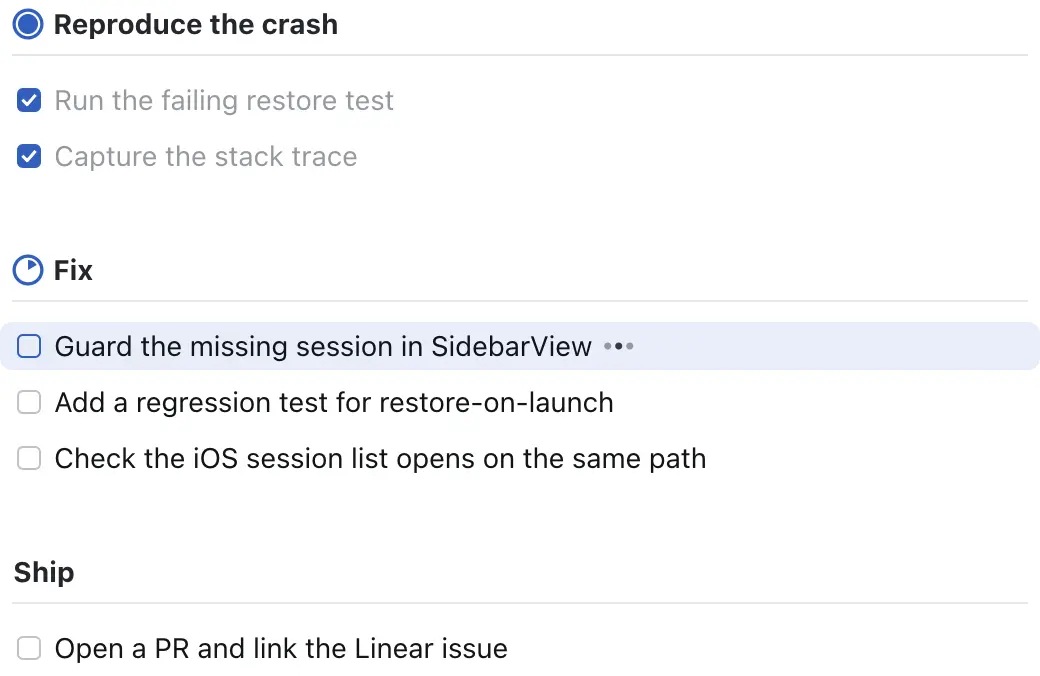
Rexpad puts a coding agent’s live plan beside its terminal
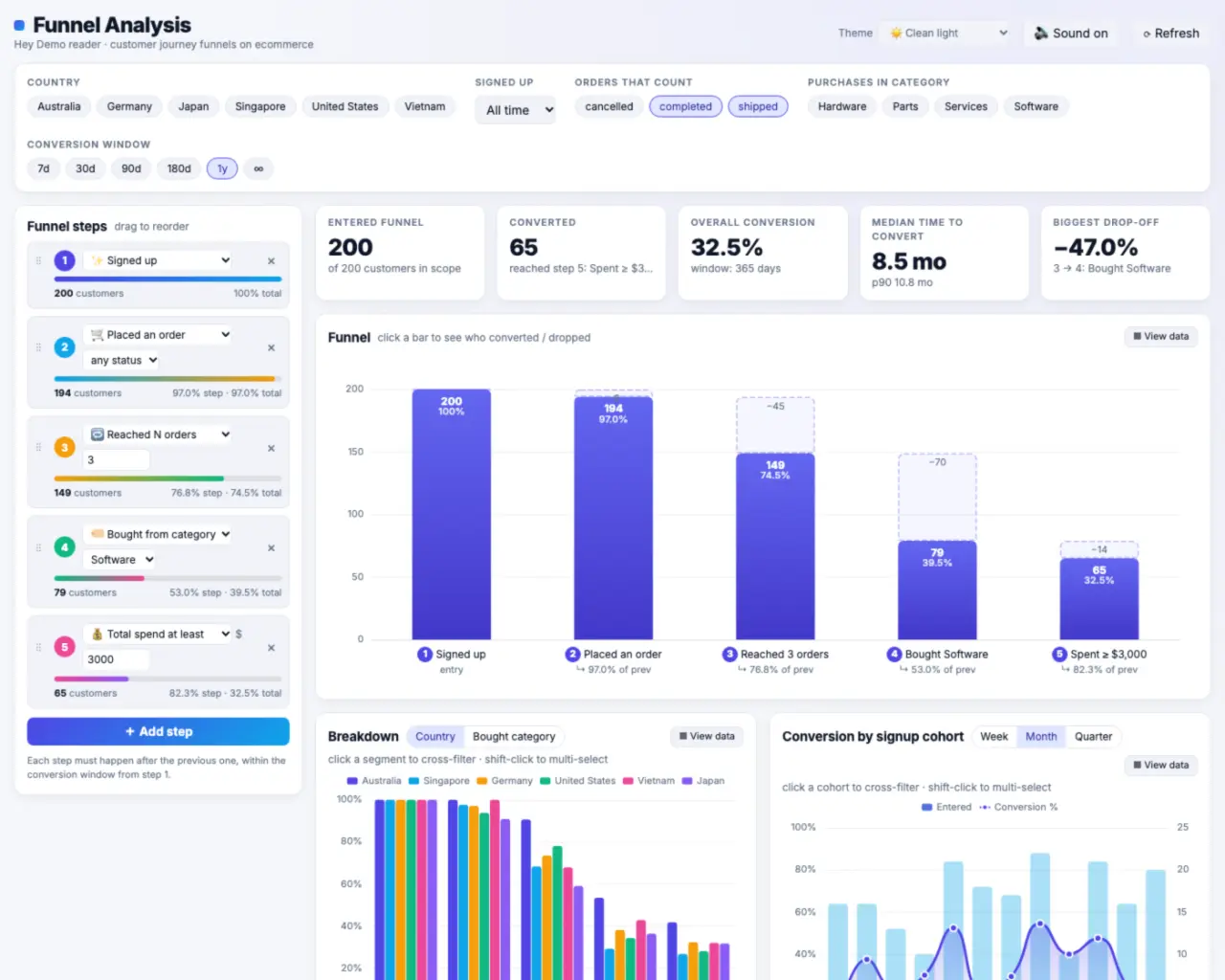
Anfra lets AI-built dashboards show the rows behind a chart