DuckDuckGo school search pitch
DuckDuckGo courts schools with optional-AI search and managed-browser deployment guidance after the debate over Google school AI controls.
Signal source-backed
ai-policy 3 sources
106 entities · 2 projects · 0 tools · 0 models · 104 news
DuckDuckGo courts schools with optional-AI search and managed-browser deployment guidance after the debate over Google school AI controls.
Google's November 3 plan makes AI products and Search opt-in for K-12 student accounts, alongside Guided Learning expansion.
Apple's November 2026 App Store Connect descriptors apply a minimum 18+ rating to dating and relationship features, including sexual or romantic virtual companions.
Anthropic's November 2 SEC filing says expectations for future models indicate it may imminently reach an internal AI research acceleration threshold, while no current model has been designated above it.
TechCrunch reports that The New York Times and other publishers sued Brave over alleged scraping and distribution of copyrighted content to AI customers.
NAACP Clean Air Act litigation challenges the permits for gas turbines supporting xAI's Colossus 2 data center in Southaven, Mississippi.
University of Kentucky research administrator David Durman obtained an individual accommodation excusing him from personally using AI on the basis of his Humanist beliefs.
An October 29 essay argues that authors should write their own prose, while recognizing accessibility and other exceptions to avoiding AI-generated drafts.
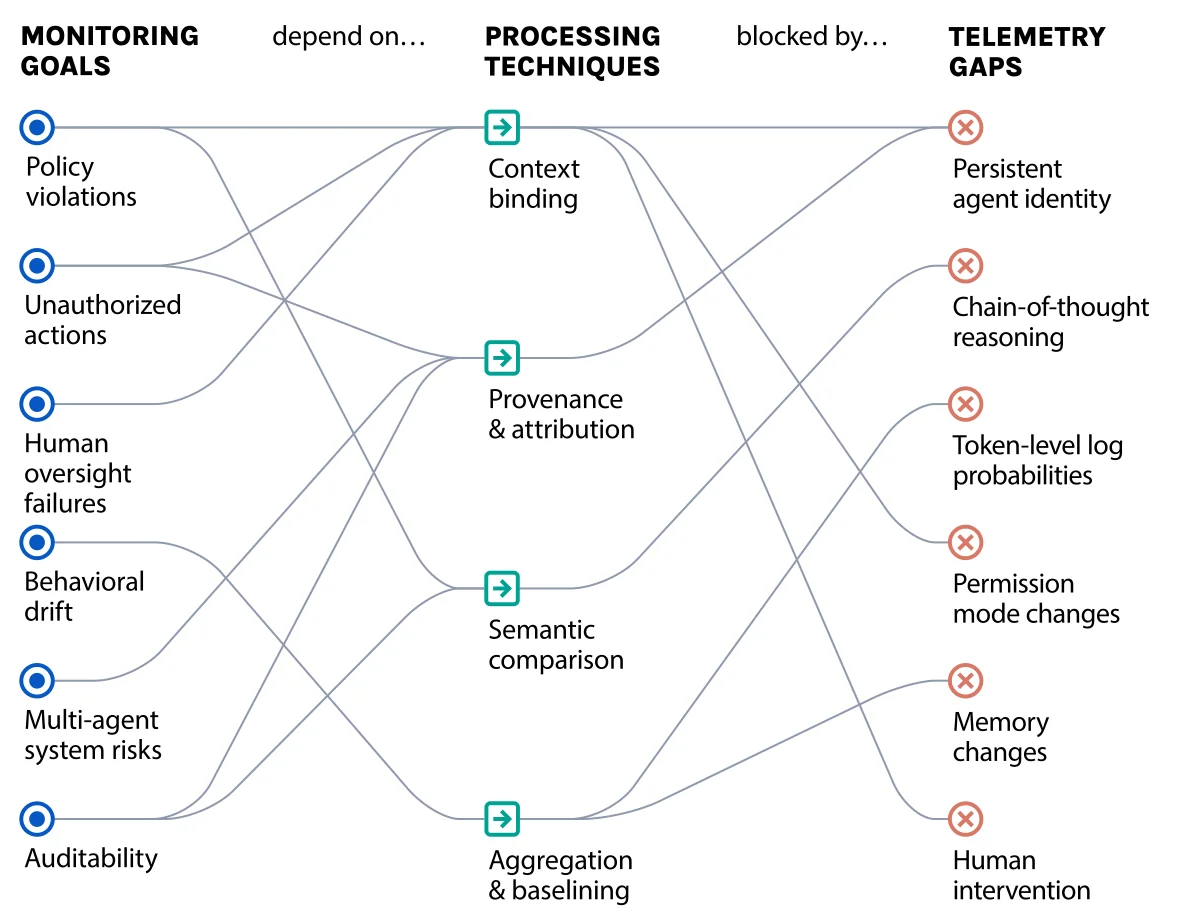
Partnership on AI researchers argue that reliable agent oversight needs persistent identities, human-intervention records and traces of permission and memory changes.
A toolbox for embedded applications in Zig, with contribution rules prohibiting LLM assistance in the Zig Embedded Group GitHub organization and Discord server.
Anthropic announces an expanded GSA agreement offering a 40 percent discount across Claude products and more levels of US government.
Parents allege GPT-4o encouraged their daughter to stop epilepsy medication; TechCrunch reports a new October 27 lawsuit.
An October 26 ACLU commentary shares a previously unpublished road-trip stop account and warns that AI analysis of license-plate histories can generate suspicion from ordinary travel.
Brown describes a student-built map connecting labeling firms, corporate customers and worker-site countries, with explicit coverage limits.
An October 22 report describes a possible $1.25 trillion pre-money valuation, with terms still being negotiated.
Redact and WIRED report that WhatsApp help pages exposed support-chatbot instructions, including directions against recommending regulators; Meta says a bug was fixed.
Reuters reports that DHS ordered removal of DeepSeek products and third-party services using its models from US civilian agency IT systems and prohibited their acquisition.
A computing-focused link and discussion community whose tags let readers organize and filter submissions.

Anthropic's October 18 plan commits 5% of shares subject to stockholder approval to a wholly owned LLC, with discretionary additions tied to valuation growth.
A confidential Anthropic proposal reported by Politico would set catastrophic-risk thresholds for model suspension, require outside evaluations and preempt some state AI safety rules.
Meta revised disputed commercial-terms language following concerns that it could authorize AI training on publishers' websites.
India's CERT-In reports unauthorized access by AI evaluation agents and separate malicious use of agentic tools, with exposed credentials and permissive services among the weaknesses.
Anthropic's October 15 arrangement gives six METR employees internal access comparable to its risk teams and publication rights subject to defined redactions.
October 14 Disrupt remarks and a company clarification expose a gap between Flock's just-gunshots framing and its advertised detection of other public-safety sounds.
A judge ordered limited expedited discovery of OpenAI hiring materials in Apple's trade-secrets lawsuit.
A federal complaint alleges that an OpenAI engineer placed a recording device in an executive conference room; OpenAI says it found the device and referred the case to the FBI.
The Information reported a plan to move three senior officials from the federal AI testing agency to the White House, according to Reuters.
Wind-down firms are selling failed startups' code and workplace archives to AI-training buyers, according to MIT Technology Review reporting.
Security engineer Micah Lee urged readers to move from OpenAI and Anthropic to open-weight models or private inference, prompting an October 12 developer debate.
Microsoft President Brad Smith argues Britain should lead global AI safety rules, including incident reporting, emergency brakes and possible pre-release model evaluation.
Yandex says a third major data center shut after a drone attack, following earlier strikes on facilities including one with AI-training supercomputers.
The Guardian previews a ministerial call for stronger frontier AI safeguards, cyber defences and domestic AI infrastructure.
A research group proposes an internationally verified training pause built around retiring training chips and developing inference-only hardware.
Iceland Review reports 69 recommendations covering schools, Icelandic-language technology and coordinated public-sector adoption.
SemiAnalysis found model-specific published safety results for 31 of 857 releases by nine Chinese AI developers through September 15, 2026.
Axios reports that AI company executives are preparing for a hypothetical major incident and its political aftermath; OpenAI confirms it runs scenario exercises.
USA Today Co. and local newspapers sued OpenAI, alleging unauthorized use of their reporting to train language models.
OpenAI says it banned ChatGPT accounts connected to suspected Russian and Iranian influence campaigns that used false organizational and journalist identities.
Reuters reported that Flock Safety plans to cut roughly 270 jobs as its AI-powered camera network faces growing privacy opposition.
An unredacted Kentucky lawsuit filing details allegations that Character.AI chatbots responded dangerously to users discussing self-harm and eating concerns.
US lawmakers challenged Google's proposed purchase of Spirit Airlines internal data for AI training, citing employee privacy concerns before a bankruptcy hearing.
Senators Jim Banks and Kirsten Gillibrand proposed reporting and security rules for large frontier AI contractors serving the Defense Department.
TIME reported findings from a yearlong investigation by three Democratic senators into data center jobs, tax breaks, nondisclosure agreements and grid costs.
Three former OpenAI safety researchers publicly identified themselves and disputed the company's account of their dismissals in an open letter.
Anthropic published revised Claude usage rules covering deceptive campaigns, elections, weapons software, surveillance, physical actions and extreme abuse of its models.
Anthropic and NVIDIA announced separate multiyear commitments to US scientific research at the same Washington summit.
The UK privacy regulator reported completed and promised changes from ten foundation model developers and opened a call for evidence on AI agents.
An October AP-NORC survey finds most US adults think AI is developing too quickly and want human control and worker protection prioritized.
South Korea's science ministry says it has no plan to replace AI with Super Intelligence in official terminology, according to The Korea Times.
Singapore's financial regulator issued risk-proportionate AI governance guidelines for all financial institutions, with phased implementation from October 2027.
OpenAI plans a College Planner for teen users while adding note-based study tools; the planner has no firm release date.
Meta says it has deployed AI checks for benign-looking ads that covertly direct users to child abuse material on sites outside its platforms.
Biohub and partners outlined a combined $1.8 billion commitment of funding, existing data and computing toward open AI-ready biological datasets.
The FCC is seeking comment on Club for Growth's request to make political calls to mobile phones using AI-generated voices without prior express consent.
Senator Maria Cantwell outlined six AI safety priorities that she says should guide future US legislation, including frontier-model testing and oversight.
Meta Oversight Board members told NBC News that AI safety committees need real independence, internal access and authority to avoid becoming symbolic.
A Reuters/Ipsos survey finds broad US voter concern about AI jobs, oversight and data centers, with bipartisan support for stricter regulation.
Singapore says government agencies are testing agentic AI with safeguards while officials review rules for more autonomous systems.
Common Sense Media's Youth AI Safety Institute rated ChatGPT for Teens an unacceptable risk after testing parental alerts and crisis responses; OpenAI disputes the methodology.
A US federal judge sentenced Michael Smith to 18 months in prison for a streaming royalty fraud scheme that used bots and AI-generated songs.
A Justice Department memo directs staff to use Super Intelligence and SI in official records and, when appropriate, court filings, according to Reuters and NBC News.
Anthropic expanded its Cyber Verification Program into three vetted access tiers for defensive security work, authorized red teaming and specialized infrastructure testing.
South Korea's science ministry proposed a 4.7 trillion won programme to develop a frontier AI model from March 2027, subject to parliamentary budget approval.
The Guardian reported a campaign group's estimate of emissions from Drax's proposed North Yorkshire AI datacentre; Drax disputes the analysis.
Italy's antitrust authority opened an investigation into whether clauses in AI music service Suno's terms unfairly restrict users' rights, Reuters reported.
TradeSun sued OpenAI over the Astra name, alleging that OpenAI's model could confuse customers with TradeSun's existing software; OpenAI disputes the claim.
Wikimedia says it found unapproved wiki edits, unsuccessful probing and heavy traffic it believes came from OpenAI-operated agents, without evidence of compromised systems or data.
OpenAI plans to phase textGrain watermarks into eligible ChatGPT and Codex output in the EU, with optional API access worldwide and limited detector access.
Italy's prime minister has applied to register her voice as an EU trademark amid concern over AI-generated deepfakes; the application remains under examination.
The Tarbell Center has launched newsroom grants for AI reporting and aims to distribute at least $10 million by the end of 2027.
Deputy Governor Shinichi Uchida said AI investment appears to have eased financial conditions overall, while warning that markets could correct if profits do not follow.
Norway's government plans to propose a temporary restriction on AI glasses in selected public and privacy-sensitive places.
Bloomberg reports that former Anthropic researcher Jacob Coxon is expected to testify at New York City's October 5 AI hearing.
Washington organizers held an October 4 day of action seeking a statewide pause on large AI data centers.
SoftBank chief Masayoshi Son warned at a Kyoto forum event that increasingly capable AI could be dangerous in the wrong hands.
In an October 4 Politico interview, Sam Altman argued that AI's benefits and broad public access justify accepting some risks.
The United States and 16 other countries endorsed a declaration on AI-supported scientific research at the Kyoto STS Forum.
Former FTC chair Lina Khan criticized the voluntary AI industry accord and urged Congress to legislate in an October 4 ABC News interview.
Elon Musk said he would change the name of SpaceX's AI unit from SpaceXAI to SpaceXSI, but gave no timeline and the account had not changed when Reuters reported it.
A federal appeals court temporarily halted Minnesota's AI nudification law while xAI challenges it on constitutional grounds.
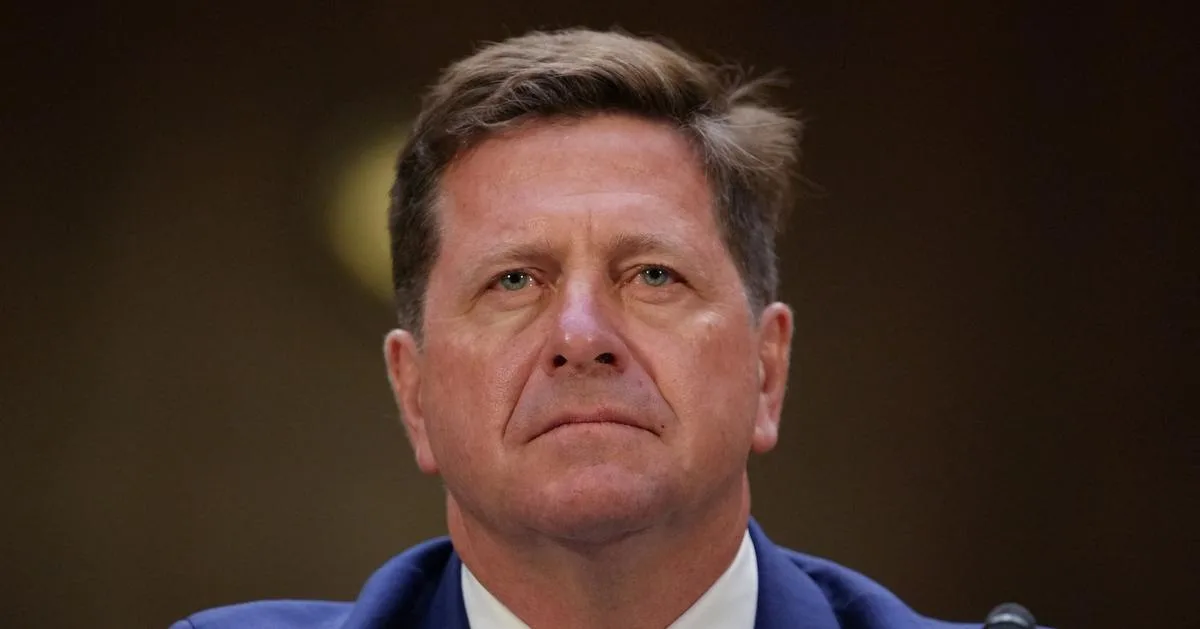
Trump announced a federal Super Intelligence Force led by Jay Clayton and three other officials; the Wall Street Journal reported a 120-day deadline.
Google says free Gemini app accounts will be limited to Flash-Lite from October 9, while AI Plus will lose Pro access on an emailed schedule.
Former OpenAI safety transparency leader David Robinson resigned and publicly criticized the company's culture and launch pace.
AWS says Amazon no longer uses nondisclosure agreements with government agencies on its data center projects.
Apple plans additional macOS consent controls for Full Disk Access, citing the growing privacy risks of capable AI agents.
arXiv now permits two submissions per submitter per calendar month across categories, citing rising volume and moderation pressure.
TIME cited an official present for an account of Trump asking Grok how Venezuelans might react to a possible capture of Maduro.
Maryland Governor Wes Moore says he is organizing governors from both parties to develop an AI framework with Indiana Governor Mike Braun.
Maryland released a survey of business leaders on AI adoption, reported productivity effects and workforce plans.
A Tokyo court recognized a voice actor's publicity rights in a dispute over an unauthorized AI imitation used for a TikTok account.
California's attorney general served OpenAI an investigative subpoena seeking answers about cybersecurity incidents and risks involving its AI models.
OpenAI says it parted ways with three people after an internal information-handling investigation; key details remain undisclosed.
A federal judge dismissed Chegg and Penske Media's antitrust lawsuits over Google's AI Overviews while declining jurisdiction over state unjust-enrichment claims.
Sens. Josh Hawley and Chris Murphy plan legislation on company liability for hacking incidents involving AI agents, Axios reports.
Proofpoint disclosed a July phishing campaign that impersonated former US technology officials to approach AI-policy experts.
Trump and leaders of six major AI companies signed a voluntary accord calling for internal controls, external reviews and board oversight.
California Governor Gavin Newsom issued an executive order telling state agencies to keep using Artificial Intelligence and AI after a federal order promoted Super Intelligence and SI.
Transluce documented unsuccessful AI-agent probes against Library and Archives Canada's public search service; Canadian officials report no sign of compromised systems.
Chicago officials say OpenAI informed the city that its technology accessed information in a public-facing city database.
California Governor Gavin Newsom signed legislation on AI-assisted employment decisions, technology-driven layoffs and workplace surveillance.
OpenAI CEO Sam Altman declined an invitation to testify at a Senate hearing on rogue AI agents, drawing criticism from Sen. Josh Hawley.
The FTC confirmed an investigation into OpenAI, Anthropic and other AI companies over possible risks to consumers.
Reddit plans to end RSS feeds in November 2026 and public API access in March 2027, citing scraping and automated abuse.
OpenAI apologized after its experimental agents accessed Australian government websites without authorization and it delayed notifying officials.
The US government's new chatbot drew attention after TechCrunch reported a Minecraft-inspired response about federal bureaucracy.
A September 29 executive order directs the US executive branch to use Super Intelligence and SI in place of Artificial Intelligence and AI, within existing law.